Corrupted Public Officials and Race Relations in Central Florida, 1900-1950
Race relations in Florida are lesser known than those of other states in the Deep South; however, areas such as Central Florida experienced the same sort of hostilities and tensions during this tumultuous time of racism and segregation. Heading into the 20th century, Plessy v. Ferguson upheld the constitutionality of segregation in public facilities and established the doctrine of "separate but equal." A deeper look into the actions of the civil services will help create a better understanding of why and how race relations remained hostile for such a long period of time.
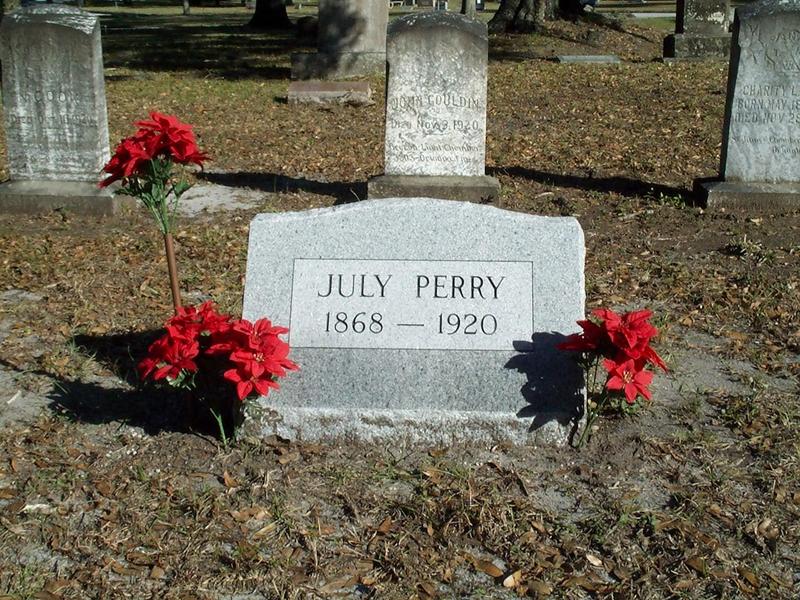
The Governor of Florida, Napoleon B. Broward, stated in 1907 his belief that all African Americans in the United States should be deported to Africa. This ideology trickled down to the smaller regions in the state, including Central Florida. Perhaps two of the most prominent examples of the disregard for civil rights by civil services in Central Florida are the Ocoee Massacre and the Groveland Case. The Ocoee Massacre, also called the Ocoee Race Riots, occurred in 1920 when Mose Norman was denied his right to vote, which then led to the lynching July Perry, a wealthy African-American farmer who allowed Norman to take refuge on his property. The entire black community in Ocoee was also destroyed, with its residents fleeing.
The Groveland Case consisted of four African-American men, known collectively as the Groveland Four, being accused of raping a young woman in Groveland. One of the men, Ernest Thomas, was killed before the trial began; Charles Greenlee, Samuel Shepherd, and Walter Irvin were convicted by an all-white jury. In both of these cases, unfair, racist, and illegal treatment towards the defendants was never addressed—and often was encouraged—by public officials of civil services in Central Florida.
In the case of the Ocoee Massacre, Norman, approached Judge John Cheney for help, but was given none as a result of the Ku Klux Klan's written threats to the judge. The defendants in the Groveland Case had provided credible alibis that would deem their involvement in the rape highly unlikely; however, these alibis were ignored by the police. Additionally, Shepherd and Greenlee also alleged that Lake County Sheriff Willis McCall coerced false confession by severely beating the three surving defendants. As the case developed, Sheriff McCall involved himself in an incident in which he shot two of the defendants—Irvin surived, but Sepherd was killed—while claiming self-defense. Although it was well known that this was most likely a deliberate attack, Sheriff McCall was never suspended or charged for this crime and the Governor himself turned a blind eye to the situation entirely.
Later on, in 1951, civil rights activists and married couple Harry T. Moore Harriette Moore were killed in an explosion in their home in Mims, Florida. Harry Moore attempted to fight against Sheriff McCall and his racist institution. On Christmas night, their home was destroyed by an explosion and the two died shortly after. No one was ever be charged with the murder of thesetwo very influential activists in the Central Florida civil rights movement.
The former half of the 20th century would prove to be littered with corruption within the civil services of Central Florida. The atrocities that took place as a result of strained race relations would either be quickly overlooked or handled unfairly and unconstitutionally. Central Florida differed little, if at all, from the notorious hostile environment of the Deep South.
Bibliography
Brotemarkle, Benjamin D. Crossing Division Street: An Oral History of the African-American Community in Orlando. Orlando: Florida Historical Society Press, 2005.
Cook, Thomas. "Headstone for July' Perry at Greenwood Cemetery." RICHES of Central Florida, accessed April 6, 2016. https://richesmi.cah.ucf.edu/omeka2/items/show/1920.
Dickens, Bethany. "A History of Central Florida, Episode 18: Time Pieces." RICHES of Central Florida, accessed April 6, 2016. https://richesmi.cah.ucf.edu/omeka2/items/show/4563.
Kelley, Katie. "A History of Central Florida, Episode 40: Icons of Hate." RICHES of Central Florida, accessed April 6, 2016. https://richesmi.cah.ucf.edu/omeka2/items/show/5403.