From Kitchens to Councils: Minorities Making Their Presence Known
Between 1956 and 1991, Orlando experienced around a 453 percent increase in population. This drastic increase inspired the rapid evolution of the city's culture. During this evolution, parts of the population that had previously been silenced due to Florida's Jim Crow laws, began to see an increase in civil rights and the ability to influence the city for the better. During the battle for integration in schools that began in 1954, Orlando's minorities organized themselves into official bodies as a way to interact between government and their own realm of ethnic diversity.
Even as a homegrown officals working out of their kitchens, African Americans in Orlando were able to organize and develop policies that raised neighborhood values and established positive opinions within the realm of social integration and social evolution in the city. The formation of the Negro Chamber of Commerce generated the opportunity to combat against the ideas of racial isolation, ethnic inequality, and the persecution of anyone who didn't have the right to run for city-wide elections. This would be the groundwork that lead to Arthur "Pappy" Kennedy joining the city council. Between 1958 and 1991, Orlando's minority officials generated positive cultural change through the introduction of new policies, programs, and procedures.
Negro Chamber of Commerce
One of the earliest known example of African Americans trying to influence the runnings of Orlando, the Negro Chamber of Commerce (NCoC) had humble beginnings in the kitchens of its participants. The chamber was formed for several reasons, including that African-American neighborhoods were being overlooked by the white city officials. Moving forward, the chamber's purpose would evolve as integration swept the state to reducing racial isolation and encouraging black business owners to make their presence known.
Beginning in 1944, the Negro Chamber of Commerce began to push for cooperation and desegregation. Between 1944 and 1956, chamber made advancement and policy that lacked recognition and enforcement from the city above them, yet it was able to advance select neighborhoods and businesses during the closing years of Florida's Jim Crow laws. During its early operation, the chamber was able to increase land values and clean up communities that up to this point had been seen as the slums of Orlando.
In 1954, the Chamber was revitalized with new purpose as the Brown v. Board of Education case settled in the U.S. Supreme Court that made segregation in schools unconstitutional; the dawn of desegregation began in Florida. The several following years in Orlando were the battlefield of integration in schools. Although the decision in 1954 was pivitol, it would be another 10 years before courts would begin hounding Orange County schools to cooperate. The debate converged in the court case Ellis v. Board of Public Instruction of Orange County in 1972.
However, with large portions of the Jim Crow South ending, the Orlando Negro Chamber of Commerce began to push for more activity, hitting mainstream attention in the city in 1955. The changes in policy affecting segregation were taken on as a major topic by Mayor Bob Carr. With the top level of city officials beginning to tear down the idea of a separated city, the chamber followed in kind. The NCoC began their changes and started garnering attention in 1962 when they were recognized by the Orlando Sentinel, for becoming involved in city works projects throughout ethnically-isolated neighborhoods. This appreciation from Orlando's primary printed news source showed the shifting mindset among Orlando citizens. The evolution of this mindset continued to shape and reshape leading to a change in everything in 1973 when the first African American was elected to a position in the city government.
Arthur "Pappy" Kennedy, became involved in the Negro Chamber of Commerce while it was still being held inside of kitchens of local business owners. Time would come back to him as his aspirations of city council began to become reality.
Minorities in the City Government
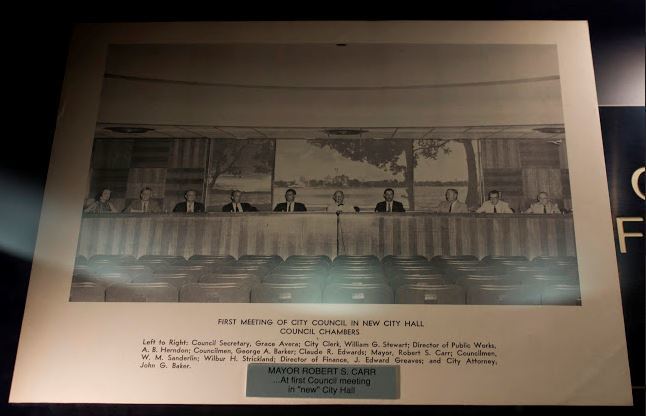
Mayor Carr made strides in providing legislation that would integrate the populations of Orlando and provide civil rights to all, and while he may not have achieved his exact mission he did leave behind a legacy for his successor, Carl T. Langford.
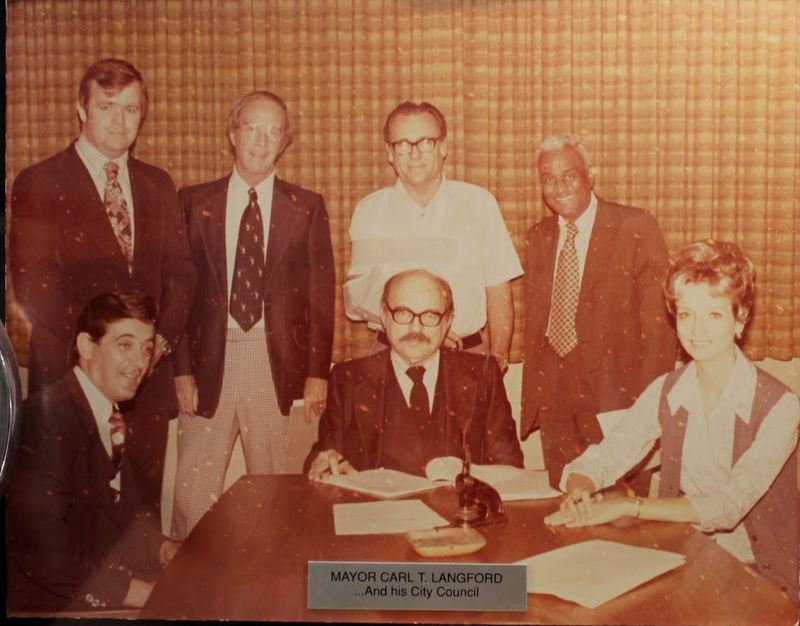
Mayor Langford began several business and economic policies that began to change what Orlando was capable of, and one of those changes was the introduction of the Minority and Women Business Enterprise, that sought to distinguish and promote business that were ran by commonly overlooked business owners.
Changes spurred on by the Negro Chamber of Commerce and Mayor Carr and Mayor Langford would lead to a total overhaul in 1973, when the people of Orlando elected Arthur "Pappy" Kennedy as the first African American to become a part of city government. While tensions between the races had yet to fully settle, the era of excluding minorities began to fall apart. As Kennedy became a wildly popular politician, the line seperatting black from white began to fade, and when Kennedy was re-elected. He set the bar at the highest approval rating of any elected official before or since at a 78 percent approval rating.
Kennedy is honored to this day as one of the leaders in civil rights for the city of Orlando, from his small beginning as a member of the Negro Chamber of Commerce to the City Council. His effects reached far beyond the ideals of African Americans being elected, as women, who were able to hold smaller roles, were empowered to take on more daunting races and win. Marble Butler, who served as a voting member of the City Council from 1984 to 1990, stated "If [the voters] will accept a black male, they'll accept a white female."
Bibilography
"Civil Rights Movement in Florida." Exploring Florida. http://fcit.usf.edu/florida/lessons/cvl_rts/cvl_rts1.htm (accessed 10 March 2016).
"Constitution of 1885." Florida Constitution Revision Committee. http://archive.law.fsu.edu/crc/conhist/1885con.html (accessed 10 March 2016).
Higginbotham, Michael F. Ghosts of Jim Crow: Ending Racism in Post-Racial America. New York: New York University Press, 2013. http://reader.eblib.com.ezproxy.net.ucf.edu/(S(kvqen2unytlsb24tvsyl01hx))/Reader.aspx?p=1126720&o=1144&u=pYpqJoZu24IPC4L9K9uCwA%3d%3d&t=1455580853&h=3F026D702142E826EA85C627E68150BA519C888C&s=42245249&ut=3781&pg=1&r=img&c=-1&pat=n&cms=-1&sd=2# (accessed February 10, 2016).
Lane, Elvis. "Speaker has Praise for Negro Chamber." June 6, 1965. Newspaper Clipping. Local History File, Albertson Public Library: Orlando, FL.
"Leadership by our Negro CofC." August 21, 1962, Newspaper Clipping. Local History File, Albertson Public Library: Orlando, FL.
"Orlando Negro Chamber of Commerce." Orlando Memory. November 4, 1945. http://dc.ocls.info/memory/organization/orlando-negro-chamber-commerce (accessed 10 March 2016).
"Pine Hills, Florida." City-Data. http://www.city-data.com/city/Pine-Hills-Florida.html (accessed February 12, 2016).
Spear, Kevin. "Pappy Kennedy’s Legacy Unites Races." The Orlando Sentinel, March 3, 1996. http://articles.orlandosentinel.com/1996-03-03/news/9602291682_1_art-kennedy-kennedy-served-city-council (Accessed 10 March 2016).
Further Reading
Ellis v Board of Public Instruction of Orange County, Florida. 421 F.2d 134. U.S. Court of App (Fifth Circuit: December 12, 1969). http://openjurist.org/421/f2d/134/ellis-v-board-of-public-instruction-of-orange-county-florida (accessed 5 April 2016).
Persons, Tom. :Orange School Mix Suit Filed." The Orlando Evening Star, April 6, 1962. Orlando Evening Star, “April 1962” Microfilm: John C. Hitt Library. A1 – A3 (accessed 6 April 2016).