From Carr to Frederick: Mayors Usher in a Sense of Community in Orlando
Three mayors, Robert Spencer Carr, Carl T. Langford, and Bill Frederick, served Orlando during a period of significant change and growth. The population of Orlando grew, not only in number, but in cultural diversity over this 35-year span. Orlando came to be seen as the place where dreams came true, a place of opportunity, and these three mayors wanted to maintain that image by implementing new programs and policies that adhered to the changing population of Orlando.
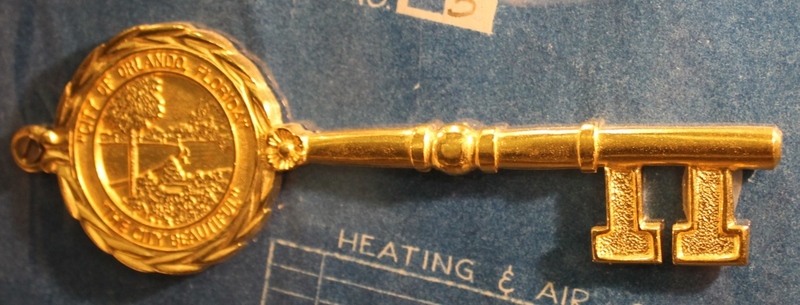
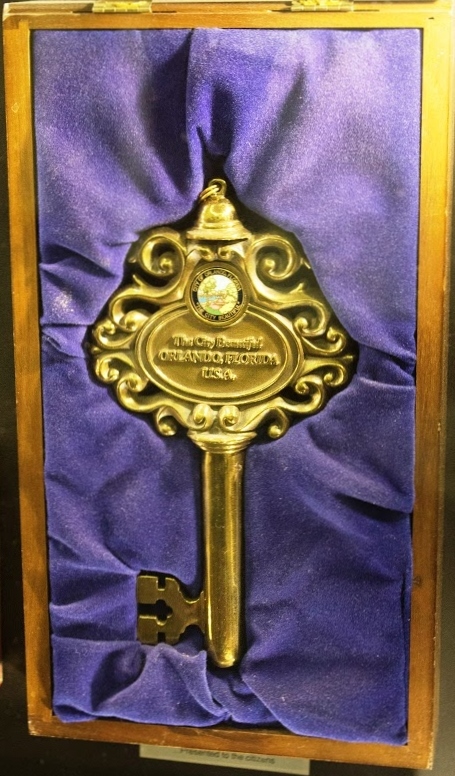
When the Civil Rights Movement swept across Orlando in 1956, Mayor Bob Carr took initiative with the installation of public monuments and the creation of committees. In 1957, Carr created the Human Relations Committee and the Inter-Racial Advisory Committee, to provide Orlando with a model group of individuals who would deal with race relations the right way and provide a Orlando with a sense of community. He also presented Orlando City Hall to the citizens of Orlando and signed for the the installation of the Centennial Fountain, also known as the Linton E. Memorial Fountain, to create a more prominent and appealing city. He wanted this fountain to add a peaceful element to the community, and a park that would help unite the people. This fountain became one of Orlando's symbols, along with the seal, which can be found on every key to the city, and the keys to City Hall.
As new businesses opened, there were "colored" and "white" signs at every corner. In June of 1961, Carr ordered the removal of such signs on the drinking fountains at City Hall, the police stations, and public parks. Then in 1963, the Inter-Racial Advisory Committee, which seated black and white individuals, announced that 56 motels and restaurants agreed to integrate voluntarilty, finally giving the African-American community choices. The black community still faced racism through the Civil Rights Act of 1964 and beyond, but these committees established by Carr set the foreground towards an integrated city. Throughout the next few years, Carr continued his determination for creating better race relations in Orlando. Sadly, in 1967, Carr had a heart attack and was hospitalized at the Orange County Memorial Hospital, where died four days later. He was buried at the Greenwood Cemetery and the office of the mayor was taken over by Carl T. Langford.
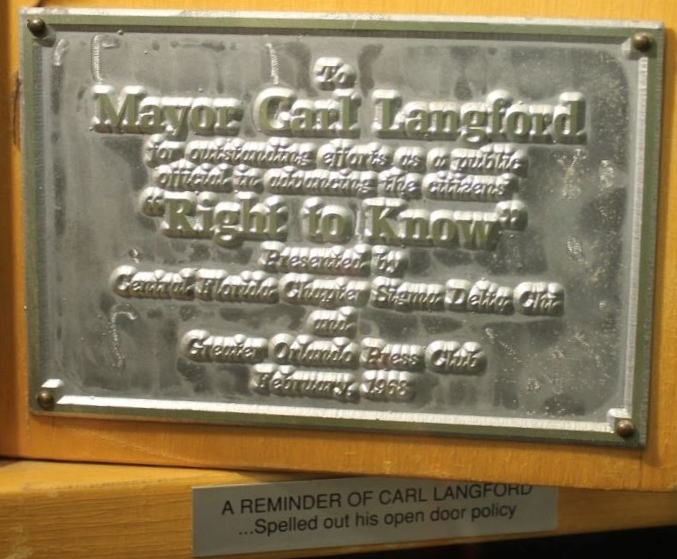
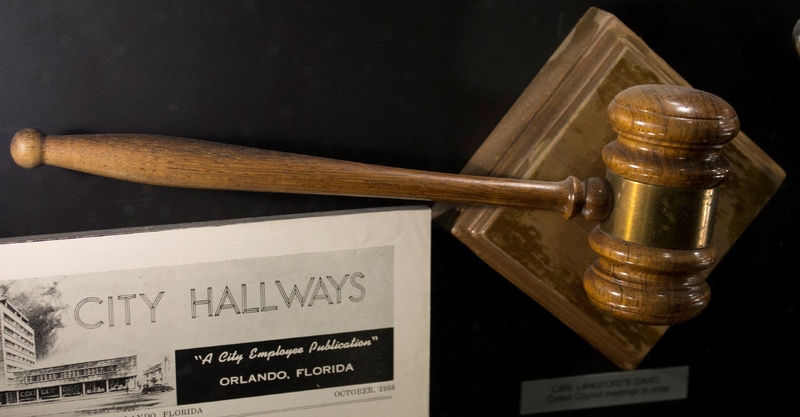
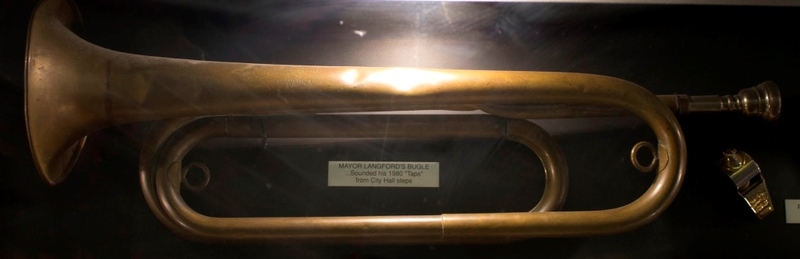
Mayor Langford served as mayor from 1967 to 1980, as a businessman, with hardly any political experience. Langford became mayor right after Walt Disney unveiled the "City of Tomorrow" to the world, which began to appropriate a lot of attention and tourism.
Mayor Langford vowed to hear every citizen's concerns, giving minorities more confidence for change, and a better sense of community, by providing the citizens of Orlando with an Open Door Policy. Mayor Langford also continued work with the committees established by Carr and joined the Orlando Police Department (OPD) to gain first-hand experience on what was really going on his city. A safe community is a city with a strong police force. During his second year in office, Mayor Langford got the members of the police force a $1,500 raise and persuaded the Orlando Utilities Commission to pledge $40,000 a month off from their revenues, to go towards the construction of the Orlando Municipal Justice Building.
Under Mayor Langford's leadership, he also created a program to help African Americans pass the written examination for entering the police academy, and a new policy that enlisted African Americans into the Orlando Fire Department, making Orlando the first city in Florida to do so. Mayor Langford was in office for over a decade and his legacy will always be the Orlando International Airport, initially the McCoy Air Force Base. Mayor Langford envisioned an airport that was spacious, appealing, and efficient for people to come visit the beautiful city and experience Disney World, but it didn't gain its popularity until Mayor Bill Frederick expanded on it during his term.
Mayor Frederick's support for the arts and education and his progressive approach as mayor transformed Orlando into "The City Beautiful." Mayor Frederick was responsible for several additions to the area. He renovated Lake Eola, reduced the crime rate in the city, and built the original Orlando Arena. He also improved public schooling with COMPACT, a program that provided mentors for students in Orange County Public Schools (OCPS). Frederick was even responsible for the $36-million City Hall building, located at 400 South Orange Avenue, that would be responsible for the creation and implementation of many changes and policies in Orlando for years to come.
"Central Florida Magazine (October 1986)." RICHES of Central Florida, accessed March 15, 2016, https://richesmi.cah.ucf.edu/omeka/admin/items/show/7881.
Langford, Carl. Hizzoner the Mayor. Chateau Publishing, Orlando, FL. 1976, 39, 50-60.
Schlueb, Mark. "Tribute will mark Orlando visionary Frederick's 50 years of public service." The Orlando Sentinel, October 19, 2013. Accessed March 10th, 2016. http://articles.orlandosentinel.com/2013-10-19/news/os-bill-frederick-legacy-20131019_1_public-service-orlando-arena-50-year.
Schlueb, Mark and Weiner, Jeff. "Carl Langford: Former Orlando mayor led city during period of tremendous growth." The Orlando Sentinel, July 9, 2011. Accessed March 10th, 2016. http://articles.orlandosentinel.com/2011-07-09/news/os-obit-carl-langford-20110709_1_mayor-buddy-dyer-carl-langford-longest-serving-mayor.
Thomas, Cook. "Lake Eola Park, 2001." RICHES of Central Florida, accessed March 15, 2016, https://richesmi.cah.ucf.edu/omeka2/items/show/2115.
"Orange County desegregation timeline." The Orlando Sentinel, 2016. Accessed March 10th, 2016. http://www.orlandosentinel.com/news/orange/orl-desegregation-timeline-htmlstory.html.
"Orlando Mayor Robert Carr Dies at 68." The St. Petersburg Times, January 30, 1967. Accessed March 10th, 2016. https://news.google.com/newspapers?nid=888&dat=19670130&id=xu1RAAAAIBAJ&sjid=aXQDAAAAIBAJ&pg=1590,6156908&hl=en.