Laying the Foundation: The Policymakers of the City Council
As of the present day, members of the Orlando City Council incude the popularly-elected Mayor and six others who are elected from respective districts and serve a four-year term. At city council meetings, elected official about a litany of topics ranging from regular council meetings, nomination boards, and development boards. The city council monitors the operation and performance of city agencies, makes land use decisions, and has sole responsibility for approving the city's budget. The city council also makes decisions and laws on a wide range of other subjects. From the ever-changing social landscape during this time from 1958 to 1992, the Orlando City Council helped lay the foundation to the diversifying City of Orlando.
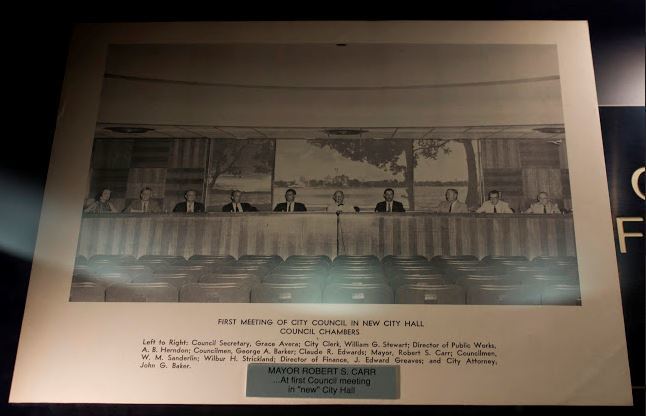
With the building of the new city hall, this gave the legislative body of Orlando a new place to meet and make decisions that would affect the future of the city. The first mayor to be in this building with his council was Mayor Bob Carr, who took office in 1956, before the building was completed. He served his terms as mayor until his untimely death from a heart attack in the early months of 1967. Which resulted in a special election being held in which Carl T. Langford was selected as mayor.
A policy of Appointive Positions was adopted by the city council that would allow the newly-elected mayor the ability to select his own personal staff. Since Mayor Langford's political experience was lacking, this gave him the ability to surround himself with people who would continue to work parallel with the growth that his predecessor Mayor Carr had during his administration. This policy allows the appointees to serve only for that specific mayor and that these individuals would submit a written resignation a week before the new mayor is sworn in.
The new mayor also had the ability to accept or decline the resignation. This gave Mayor Langford more control over his personal sphere of influence within his position as mayor. Eventually giving Mayor Bill Frederick the same ability later on to have the continuity of people who served with mayors. Having the ability to keep those appointees would also give the mayor a simpler transition since he had the experience of others who have served with a predecessor and would know the interworking of the mayor's office.
In 1969, another policy adopted by the city council under Mayor Langford gave the city council a process of combing through requests from the general public to erect monuments and memorials on public property. The policy encouraged the building monuments and memorials while having a fair and balanced decision-making process. With a streamline process of making monuments, this would give people the desire to have monuments and signage made.
In 1969, the City Operations Committee Organization Policy was adopted under Mayor Langford's tenure. The committee was created for inter-departmental coordination and cooperation and also provided some coordination with other governmental units for exchanging information. This gave the City of Orlando the ability to have a streamlines committee that can help other agencies cooperate for the exchange of information and advise on certain policies that would pertain to them.
In 1970, working towards the end of Mayor Langford's term as mayor saw the adoption of the Reimbursement of Educational Expenses documentation for city employees. This incentivized prosepctive employees to work with the city for the benefits that it would offerand also created more competition in the applications.
All of these policies laid a foundation during a time when population was growing exponentially, but also becoming more diverse with the Civil Rights Movement. These policies would give Orlando the potential to grow even further as city, which is shown in having an increasing number of people settle down in Orlando, tourist visiting, and businesses making Orlando their home. With the Civil Rights Movement was ending, Orlando's legislative body took an incredible step in the right direction in giving Orlando a solid foothold into becoming one of the biggest cities in Florida and making Orlando a community that was ready for the future.
Bibilography
City of Orlando Administrative Offices. "131.3 SUBJECT: CITY OPERATIONS COMMITTEE- ORGANIZATION & POLICY." Policy and Procedure, Orlando Florida, 1969. http://www.cityoforlando.net/cityclerk/wp-content/uploads/sites/12/2015/02/131_3.pdf.
City of Orlando Families, Parks & Recreation. "211.4 SUBJECT: MEMORIALS AND MONUMENTS POLICY." Policy and Procedure, Orlando Florida, 1969. http://www.cityoforlando.net/cityclerk/wp-content/uploads/sites/12/2015/02/211_4.pdf.
City of Orlando Executive Offices. "101.2 SUBJECT: APPOINTIVE POSITIONS." Policy and Procedure, Orlando Florida, 1968. http://www.cityoforlando.net/cityclerk/wp-content/uploads/sites/12/2015/02/101_2.pdf.
City of Orlando General Administration Department Human Resources
Division. "808.17 SUBJECT: REIMBURSEMENT OF EDUCATIONAL EXPENSES." Policy and Procedure, Orlando Florida, 1970. http://www.cityoforlando.net/cityclerk/wp-content/uploads/sites/12/2015/02/808_17.pdf
"About Us." Granite Knight Monuments. April 1, 2016. http://www.graniteknightmonuments.com/about_us.
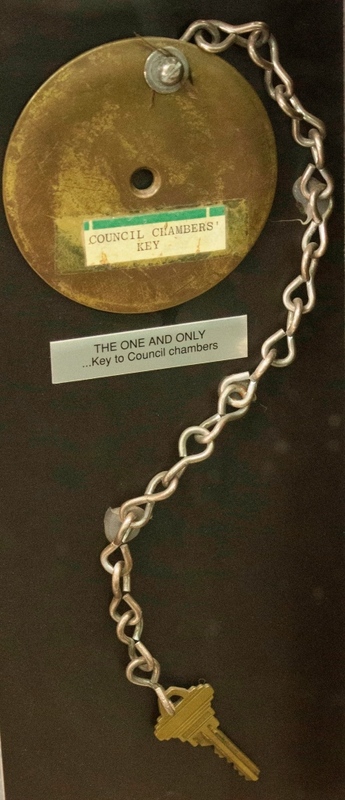
"Orlando City Council Chambers Key." RICHES of Central Florida, accessed April 7, 2016, https://richesmi.cah.ucf.edu/omeka/items/show/7872.
"Mayor Bob Carr at the First Orlando City Council Meeting in the New Orlando City Hall." RICHES of Central Florida, accessed April 7, 2016, https://richesmi.cah.ucf.edu/omeka/items/show/7874.