Captain Lee Silver
Captain Lee Silver 232nd Infantry Regiment, 42nd Infantry Division
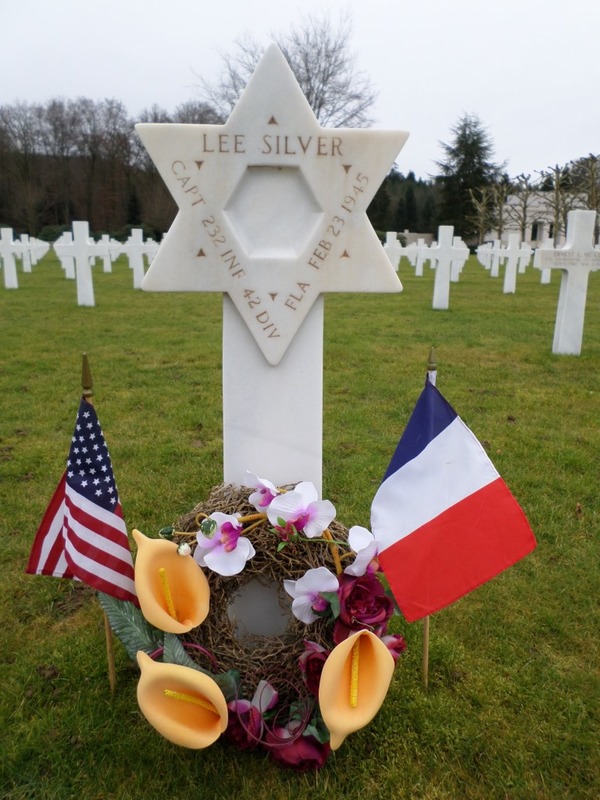
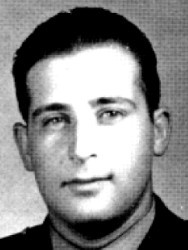
On January 5, 1945, First Lieutenant Lee Silver earned a silver star near the town of Herrlisheim, France. Enemy forces pinned down and cut off Silver and the G Company from the rest of the 232nd Infantry Regiment. No longer able to communicate with their regiment, Lieutenant Silver took it upon himself to make a lone run into enemy positions, with gunfire raining down on him. He took multiple trips during intense fighting to reach his commanding officers and relay important information and messages. This process became even more difficult as enemy forces eventyally surrounded the company. For his bravery, his commanders awarded him the Silver Star and promoted Silver to Captain.[1]
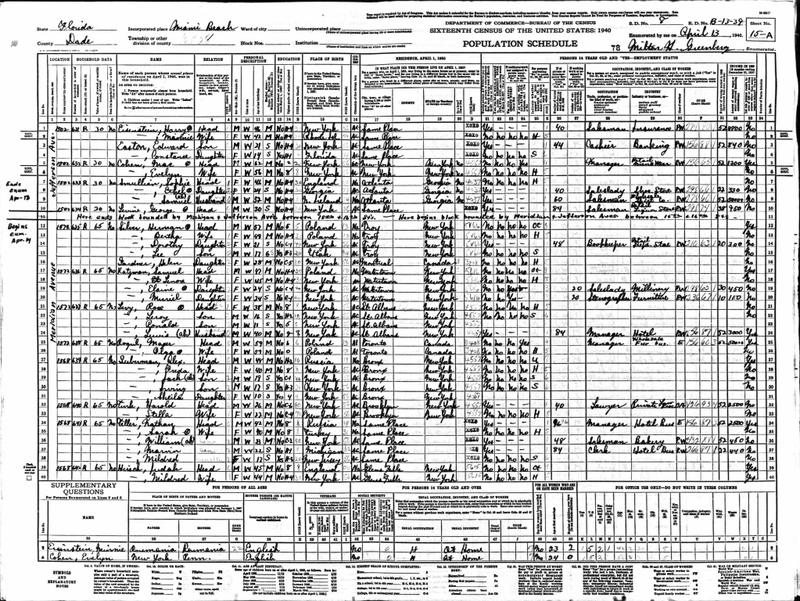
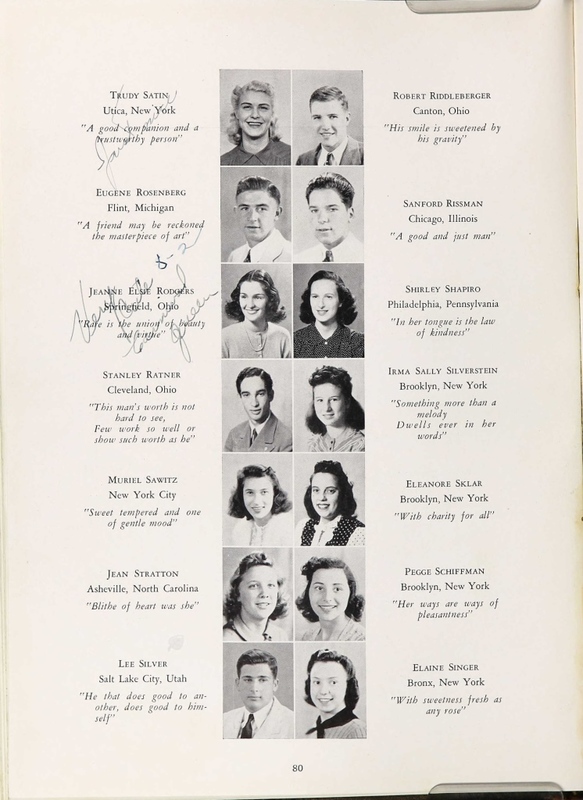
Lee Silver, a Jewish-American, was born in Salt Lake City, Utah[2]around 1923, to Herman and Dorothy Silver.[3] The Silvers, born in the 1880’s, immigrated from the Austria-Hungary Empire in the early 20th century.[4] Like many Eastern Europeans that immigrated during this era, the Silvers most likely came to New York to escape persecution and to find better economic opportunities.[5] His older sisters, Dorothy and Helen, were born in New York.[6] At some time in the early 1920s, they moved west to Utah where Lee was born. During his childhood, they returned to Troy, New York around 1935 and stayed there for a time.[7] The family moved again and appeared on the 1940 Census at 1572 Meridian Avenue in Miami Beach, Florida.[8] Lee attended Miami Beach High School and graduated in 1940.[9]
With the United States entering the war, Lee joined or was drafted into the Army and then assigned to the 232nd Infantry Regiment, 42nd Infantry division.[10] This unit was reactivated on July 14th, 1943 at Camp Gruber in Oklahoma.[11] Silver’s division was nicknamed “Rainbow"[12], because the earlier division consisted of National Guard units that stretched across 27 states and was the most famous fighting division of World War I.[13] General Douglas McArthur, a member of the "Rainbow" division, made a speech upon reactivation saying “the rainbow stretches across the land and represents the people of our country. This division cannot fail, because America cannot fail.”[14]
When the 42nd Division entered the war, the Army split it into two groups.[15] Some of them left on November 13, 1944[16] and were in foxholes until they met up with their counterparts on Christmas Eve, along the North side of Strasbourg on the Rhine River.[17] Lee and the 232nd Infantry Regiment took up on the north flank of Strasbourg, opposing the German forces on the other side of the Rhine River.[18] The Germans now knew that there were new enemy forces across the river and decided to do a boat patrol to retrieve information by capturing an enemy soldier.[19] However, the German patrol failed because of heavy machine gun fire.[20] The two sides would continue small firefights until January 4, 1945 when G Company moved to the town of Offendorf, to fill a gap in the 232 Regiment, 1st and 2nd Battalions.[21]
The Germans put the “Rainbow” Division to the test on January 5, when they launched major attacks on the towns of Gambsheim, Offendorf, Kilstett, and Herlisheim. During the battle at Herlisheim, Frist Lieutenant Lee Silver’s commanders noted him for heroism, awarded him the Silver Star, and promoted him to the rank of captain.[22] The battle resulted with G Company suffering major casualties and being forced to retreat. [23]. Even though they lost the battle, “Rainbow” Company would continue fighting the Germans, eventually winning and leaving combat duty on January 27, 1945.[24]
The 42nd Division would be out of combat until February 14th, when they received orders to move into Wimmenau and Wingen near the Hardt Mountains, France.[25] The 232nd Infantry Regiment completed 38 reconnaissance patrols, along with 36 combat patrols in a little over ten days.[26] During these patrols, 2 soliders were killed, 16 were wounded, and 2 were missing.[27] Among the casualties, was Captain Lee Silver. He died on February 23, 1945.[28] The war would continue until Nazi Germany surrendered on May 7, 1945. By that time the “Rainbow” Division had served 114 days in combat, and advanced 450 miles to the Austria Border.[29]
The U.S. Army buried Captain Lee Silver at Epinal American Cemetery memorial in Lorraine, France with his fellow soldiers who perished in World War II.[30]
Written by Sarah Cooper
[1] Find A Grave - Millions of Cemetery Records and Online Memorials. Find A Grave - Millions of Cemetery Records and Online Memorials. (Accessed March 20, 2016). http://www.findagrave.com/cgi-bin/fg.cgi?page=gr
[2] Ancestry.com. U.S., School Yearbooks, 1880-2012 [database on-line]. Provo, UT, USA: Ancestry.com Operations, Inc., 2010. (Accessed March 20, 2016). http://search.ancestry.com/cgi-bin/sse.dll?indiv=1&dbid=1265&h=99580447&ssrc=pt&tid=89418910&pid=46594276673&usePUB=true
[3] Sixteenth Census of United States, 1940, Dade County, Florida, digital s.v. “Lee Silver,” Acenstry.com (Accessed March 20, 2016)http://search.ancestry.com/cgi-bin/sse.dll?indiv=1&dbid=2442&h=129592354&ssrc=pt&tid=89418910&pid=46594276673&usePUB=true
[4] Ibid.
[5] "Immigration Library." Immigration Library. (Accessed March 22, 2016). http://www.energyofanation.org/waves_of_austro-hungarian_immigration.html.
[6] 1940, Sixteenth Census of United States, Dade County, Florida, digital s.v. “Lee Silver,” Acenstory.com (Accessed March 20, 2016)http://search.ancestry.com/cgi-bin/sse.dll?indiv=1&dbid=2442&h=129592354&ssrc=pt&tid=89418910&pid=46594276673&usePUB=true
[7] Ibid.
[8] Ibid.
[9] Ancestry.com. U.S., School Yearbooks, 1880-2012 [database on-line]. Provo, UT, USA: Ancestry.com Operations, Inc., 2010. (Accessed March 20, 2016). http://search.ancestry.com/cgi-bin/sse.dll?indiv=1&dbid=1265&h=99580447&ssrc=pt&tid=89418910&pid=46594276673&usePUB=true
[10] "Lee Silver." American Battle Monuments Commission. (Accessed March 22, 2016.) https://www.abmc.gov/node/404991#.VvFYM_krKUk.
[11] Daly, Hug C. 42nd "Rainbow" Infantry Division: A Combat History of World War II. Baton Rouge: Army & Navy Publishing Company, 1946. Accessed March 22, 2016. 3. https://archive.org/details/42ndRainbowInfantryDivisionACombatHistoryOfWorldWarIi
[12] Ibid.
[13] Ibid.
[14] Ibid.
[15] Ibid; 13.
[16] Ibid;
[17]Ibid; 14.
[18] Ibid.
[19] Ibid.
[20] Ibid.
[21] Ibid;.15.
[22] Find A Grave - Millions of Cemetery Records and Online Memorials. Find A Grave - Millions of Cemetery Records and Online Memorials. (Accessed March 20, 2016.) http://www.findagrave.com/cgi-bin/fg.cgi?page=gr
[23]Daly, Hug C. 42nd "Rainbow" Infantry Division: A Combat History of World War II. 21.
[24] Ibid;.36.
[25] Ibid.
[26] Ibid.37.
[27] Ibid.
[28] "Lee Silver." American Battle Monuments Commission. (Accessed March 22, 2016.) https://www.abmc.gov/node/404991#.VvFYM_krKUk.
[29]Daly, Hug C. 42nd "Rainbow" Infantry Division: A Combat History of World War II. Baton Rouge: Army & Navy Publishing Company, 1946. Accessed March 22, 2016. 3. https://archive.org/details/42ndRainbowInfantryDivisionACombatHistoryOfWorldWarIi
[30] Find A Grave - Millions of Cemetery Records and Online Memorials. Find A Grave - Millions of Cemetery Records and Online Memorials. (Accessed March 20, 2016). http://www.findagrave.com/cgi-bin/fg.cgi?page=gr