Browse Items (194 total)
- Collection: Florida Space Coast History Collection
Sort by:
Launch Complex 39 at John F. Kennedy Space Center
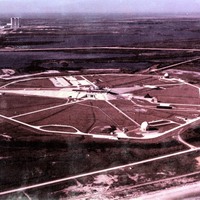
Launch Complex 39 (LC-39) at John F. Kennedy Space Center was constructed specifically for the Saturn V rockets, which powered Lunar missions of Project Apollo. The complex was originally conceived as at least a three-pad complex in the early 1960s,…
Fueling Umbilical Testing for Project Apollo
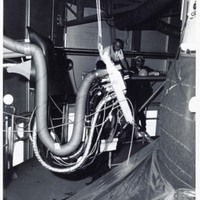
This photograph is described by the National Aeronautics and Space Administration (NASA) as "[v]iew after ejection of Umbilical Plug." This took place in Hangar AF at John F. Kennedy Space Center (KSC) in Merritt Island, Florida.
Verification Vehicle Being Moved to Launch Complex 34
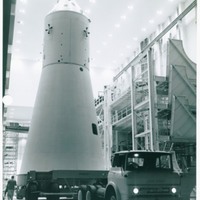
An Apollo verification vehicle being moved from the Manned Spacecraft Operations Building (MSOB) (MSOB) at John F. Kennedy Space Center (KSC) industrial Area to Launch Pad 34 in Cape Canaveral Air Force Station (CCAFS). Verification vehicles are…
Mating Lunar Module 1 to Spacecraft Lunar Module Adapter in Manned Spacecraft Operations Building
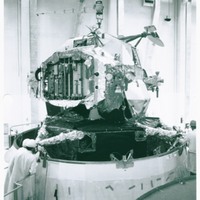
Lunar Module (LM) 1 (LM-1) was the first flight-ready version. It was test launched aboard a Saturn IB booster designated AS-204 with the mission known as Apollo 5. Apollo 5 was an unmanned test mission, which used the booster that was supposed to be…
Apollo Pad Abort Test
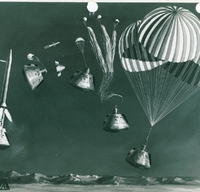
An artist's rendering of a pad abort test at White Sands Missile Range in New Mexico. Quoting the National Aeronautics and Space Administration (NASA): "This Project Apollo Pad Abort test sequence shows the vehicle from launch escape motor ignition…
Returning to Orbiting CSM
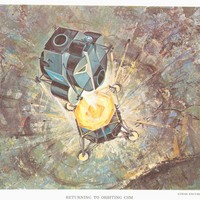
A drawing showing the Lunar Excursion Module (LEM), later called the Lunar Module (LM), returning from the lunar surface to rejoin the Command/Service Module (CSM). The LEM was the landing portion of the Apollo spacecraft. The CSM was a separate…
Apollo Handling GSE
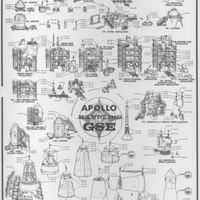
A chart showing the parts and steps involved with a assembly of Apollo Command/Service Module (CSM), Lunar Module (LM), and Spacecraft Launch Adapter (SLA). This visual guide indicates what should be done to make that part of the spacecraft launch…
Mating Apollo Command/Service Module to Launch Adapter
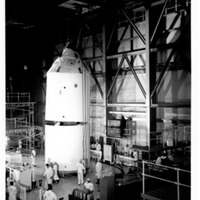
An early mating of a test Apollo Command/Service Module (CSM) to a Launch Adapter in Hangar AF in the Cape Canaveral Air Force Station (CCAFS) industrial area. The CSM, along with the Lunar Module (LM), was a spacecraft used during Project Apollo to…
Mating Apollo Command Module to the Service Module
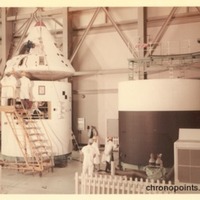
An early mating of a test Apollo Command Module to the Service Module in Hangar AF in the Cape Canaveral Air Force Station (CCAFS) industrial area. The Apollo Command Module was the crew cabin for the Apollo Command/Service Module (CSM). The CSM,…
First Launch of Saturn I Booster
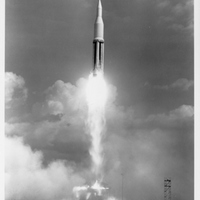
The first launch of the Saturn I (SA-1) booster from Launch Complex 34 at Cape Canaveral Air Force Station (CCAFS) in Cape Canaveral, Florida. Saturn I was the first heavy-lift dedicated space launcher used in the United States. The Saturn I rocket…
Assembly of AS-500F Verification Vehicle
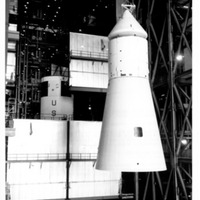
The assembly of the AS-500F (also called Facilities Integration Vehicle) full-scale mock-up of the Apollo/Saturn V launch verification vehicle. The AS-500F was used to verify assembly methods, the use of the crawler-transporter to move the vehicle to…
Construction of Special Assembly Building
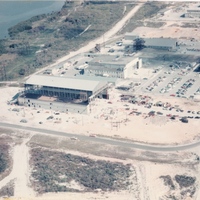
An aerial photograph of the Special Assembly Building (later known as Hangar AF) under construction at Cape Canaveral Air Force Station (CCAFS) in Cape Canaveral, Florida. At present, the hangar is used by John F. Kennedy Space Center's (KSC) for its…
Technicians Preparing an Apollo Spacecraft
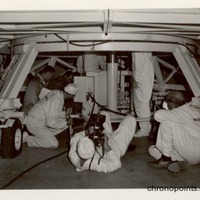
Technicians working under what is presumed to be a Command Module or a Service Module to prepare it for mating during Project Apollo at John F. Kennedy Space Center (KSC) in Merritt Island, Florida. The Apollo program was the third U.S. manned…
Launch Complex 37 Pre-launch Preparations for Saturn I
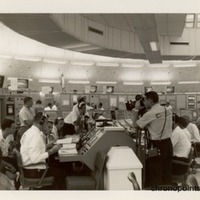
A view inside Launch Complex 37's blockhouse at the Cape Canaveral Air Force Station (CCAFS) the day before the launch of the Saturn I (SA-7) on its final qualification flight. Saturn I was the first heavy-lift dedicated space launcher used in the…
Saturn I Launch at Launch Complex 34
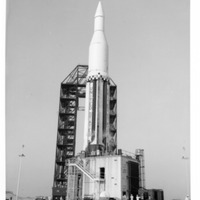
The second test flight of the Saturn I (SA-2) rocket was launched successfully not long after this photograph was taken at Cape Canaveral Air Force Station (CCAFS) in Cape Canaveral, Florida. The Saturn I rocket was designed to launch payloads into…
Transportation of the Saturn V Crawler-Transporter to Launch Pad 39
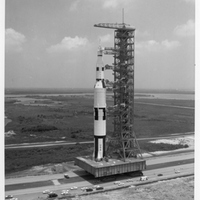
The crawler-transporter-transporter moving a Saturn V to the launch pad at John F. Kennedy Space Center's Launch Complex 39 (LC-39). The National Aeronautics and Space Administration (NASA) had previously assembled launch vehicles at the pad,…
Apollo Departing the Vehicle Assembly Building
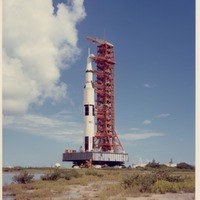
The crawler-transporter-transporter moving a Saturn V to the launch pad at John F. Kennedy Space Center's Launch Complex 39 (LC-39). The National Aeronautics and Space Administration (NASA) had previously assembled launch vehicles at the pad,…
Skylab 1 and Skylab 2 at Launch Pad 39A and Launch Pad 39B
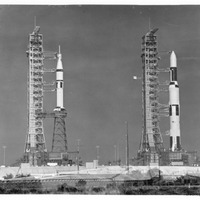
Skylab 1 and Skylab 2 before launch on Launch Pad 39A and Launch Pad 39B, contrasting the much larger Saturn V used for Skylab 1 (foreground) and smaller Saturn IB (background) at John F. Kennedy Space Center (KSC) in Merritt Island, Florida. Skylab…
Skylab Space Station as Seen From Skylab 4 CSM
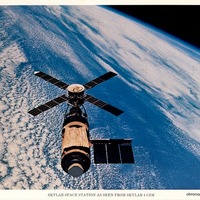
A view of the Skylab Space Station from the Skylab 4 (SL-4) Command/Service Module (CSM). As Project Apollo was winding down and the final three missions (Apollo 18, Apollo 19, and Apollo 20) were canceled, the National Aeronautics and Space…
Apollo-Saturn IB Launch Vehicle of Skylab 3 Sits on Launch Pad 39B
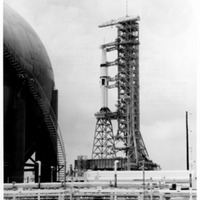
The Apollo-Saturn IB Launch Vehicle of Skylab 3 (SL-3) at Launch Pad 39B of John F. Kennedy Space Center (KSC) in Merritt Island, Florida. As Project Apollo was winding down and the final three missions (Apollo 18, Apollo 19, and Apollo 20) were…
Skylab 3 Mission Training
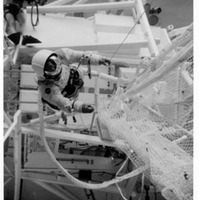
Skylab 3 (SL-3) astronaut Jack R. Lousma, training underwater in the neutral buoyancy facility at Lyndon B. Johnson Space Center in Houston, Texas. As Project Apollo was winding down and the final three missions (Apollo 18, Apollo 19, and Apollo 20)…
Maintenance Crew on Skylab 1 at Launch Pad 39A
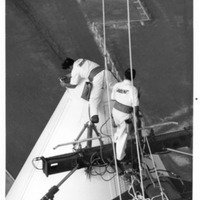
The maintenance crew on Skylab 1 at Launch Pad 39A of John F. Kennedy Space Center (KSC) in Merritt Island, Florida. As Project Apollo was winding down and the final three missions (Apollo 18, Apollo 19, and Apollo 20) were canceled, the National…
Skylab 1 Launch
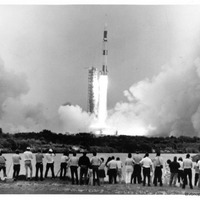
The launch and liftoff of the last Saturn V at John F. Kennedy Space Center (KSC) in Merritt Island, Florida. As Project Apollo was winding down and the final three missions (Apollo 18, Apollo 19, and Apollo 20) were canceled, the National…
Launch Control Center During a Skylab Launch
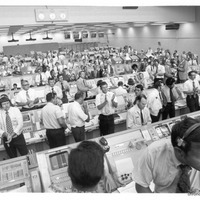
Launch Control Center at John F. Kennedy Space Center (KSC) in Merritt Island, Florida, during a Skylab launch. As Project Apollo was winding down and the final three missions (Apollo 18, Apollo 19, and Apollo 20) were canceled, the National…
Skylab 2 Crew at John F. Kennedy Space Center
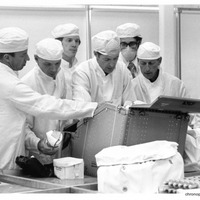
The Skylab 2 crew, including Science Pilot Joseph P. Kerwin (1932-), at John F. Kennedy Space Center (KSC) in Merritt Island, Florida. As Project Apollo was winding down and the final three missions (Apollo 18, Apollo 19, and Apollo 20) were…
Skylab 2 Crew at Launch Pad 39A
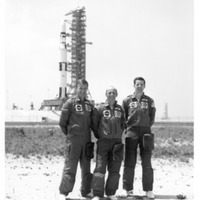
The Skylab 2 crew in front of the Saturn V launch vehicle, which carried Skylab 1 into orbit, at Launch Pad 39A of John F. Kennedy Space Center (KSC) in Merritt Island, Florida. As Project Apollo was winding down and the final three missions (Apollo…
Skylab 2 Crew at Launch Pad 39B
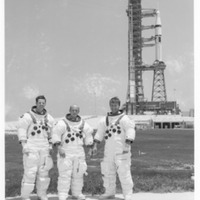
The Skylab 2 crew in front of the Saturn IB launch vehicle at Launch Pad 39B of John F. Kennedy Space Center (KSC) in Merritt Island, Florida. As Project Apollo was winding down and the final three missions (Apollo 18, Apollo 19, and Apollo 20) were…
Skylab 2 Launch
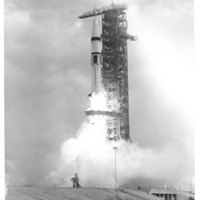
The Skylab 2 Launch at John F. Kennedy Space Center (KSC) in Merritt Island, Florida. As Project Apollo was winding down and the final three missions (Apollo 18, Apollo 19, and Apollo 20) were canceled, the National Aeronautics and Space…
Skylab 2 Mission Training
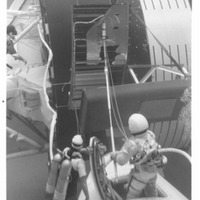
Skylab 2 mission training at Lyndon B. Johnson Space Center in Houston Texas. The first photographs shows Commander Paul J. Weitz (1932-) (1930-1999) and the second photographs shows Commander Pete Conrad, both training underwater in the neutral…
Skylab 3 Crew Training at Marshall Space Flight Center
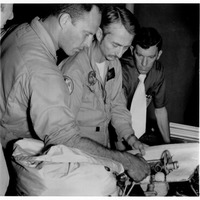
The Skylab 3 (SL-3) crew training at Marshall Space Flight Center in Huntsville, Alabama. Photographed from left to right are Commander Alan Bean (1932-), Science Pilot Owen K. Garriott (1930-) (1930-), and Command Module Pilot Jack R. Lousma…
Skylab 3 Crew Training at Lyndon B. Johnson Space Center
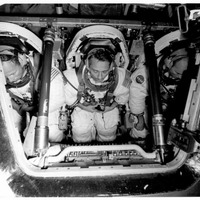
The Skylab 3 (SL-3) crew training at Lyndon B. Johnson Space Center in Houston, Texas. The first photograph shows, from left to right, Command Module Pilot Jack R. Lousma (1936-), Science Pilot Owen K. Garriott (1930-) (1930-), and Commander Alan…
Fueling Umbilical Testing for Project Apollo
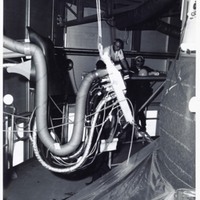
This photograph is described by the National Aeronautics and Space Administration (NASA) as "[v]iew after ejection of Umbilical Plug." This took place in Hangar AF at John F. Kennedy Space Center (KSC) in Merritt Island, Florida.
Skylab 3 Crew at Lyndon B. Johnson Space Center
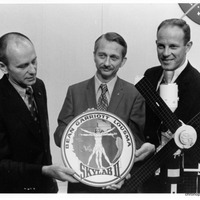
The Skylab 3 (SL-3) crew at Lyndon B. Johnson Space Center in Houston, Texas. Photographed from left to right are Commander Alan Bean (1932-), Science Pilot Owen K. Garriott (1930-) (1930-), and Command Module Pilot Jack R. Lousma (1936-). As Project…
Skylab 3 Crew at John F. Kennedy Space Center
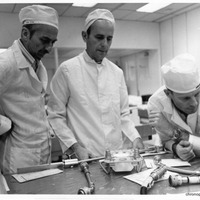
The Skylab 3 (SL-3) crew training at John F. Kennedy Space Center's Manned Spacecraft Operations Building (MSOB) (MSOB) in Merritt Island, Florida. Photographed from left to right are Science Pilot Owen K. Garriott (1930-) (1930-), Commander Alan…
Verification Vehicle Being Moved to Launch Complex 34
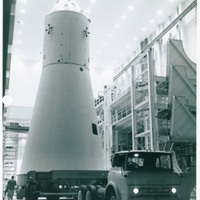
An Apollo verification vehicle being moved from the Manned Spacecraft Operations Building (MSOB) (MSOB) at John F. Kennedy Space Center (KSC) industrial Area to Launch Pad 34 in Cape Canaveral Air Force Station (CCAFS). Verification vehicles are…
Jack R. Lousma of Skylab 3
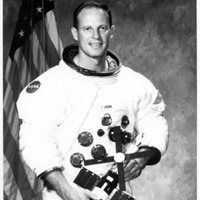
Command Module Pilot Jack R. Lousma (1936-) of Skylab 3 (SL-3). As Project Apollo was winding down and the final three missions (Apollo 18, Apollo 19, and Apollo 20) were canceled, the National Aeronautics and Space Administration (NASA) looked for…
Mating Lunar Module 1 to Spacecraft Lunar Module Adapter in Manned Spacecraft Operations Building
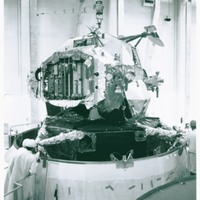
Lunar Module (LM) 1 (LM-1) was the first flight-ready version. It was test launched aboard a Saturn IB booster designated AS-204 with the mission known as Apollo 5. Apollo 5 was an unmanned test mission, which used the booster that was supposed to be…
Early Version of Skylab 3 Mission Emblem
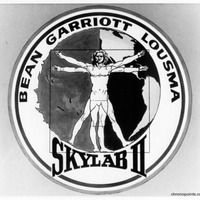
The emblem for the Skylab 3 (SL-3) mission. Due to miscommunication about program numbering, the emblem mistakenly states "Skylab II." As Project Apollo was winding down and the final three missions (Apollo 18, Apollo 19, and Apollo 20) were…
Apollo Pad Abort Test
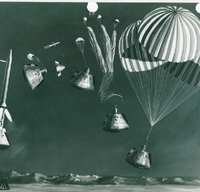
An artist's rendering of a pad abort test at White Sands Missile Range in New Mexico. Quoting the National Aeronautics and Space Administration (NASA): "This Project Apollo Pad Abort test sequence shows the vehicle from launch escape motor ignition
Skylab 3 Preparing for Launch on Launch Pad 39B
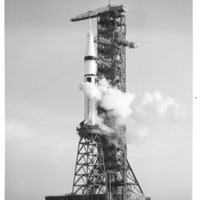
Skylab 3 (SL-3 preparing for launch on Launch Pad 39B of John F. Kennedy Space Center (KSC) in Merritt Island, Florida. As Project Apollo was winding down and the final three missions (Apollo 18, Apollo 19, and Apollo 20) were canceled, the National…
Skylab 3 Astronaut Owen K. Garriott and Family
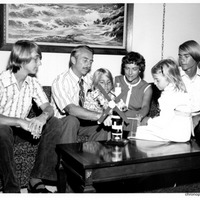
Skylab 3's Science Pilot Owen K. Garriott (1930-) with his family. To his left are Richard Allen Garriott (1961-), Helen Mary Walker Garriott, and Linda S. Garriott (1966-). The two sons on the end are Randall O. Garriott (1955-) and Robert K.…
Mating Apollo Command/Service Module to Launch Adapter
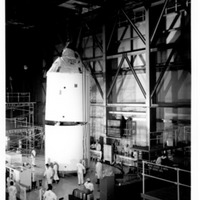
An early mating of a test Apollo Command/Service Module (CSM) to a Launch Adapter in Hangar AF in the Cape Canaveral Air Force Station (CCAFS) industrial area. The CSM, along with the Lunar Module (LM), was a spacecraft used during Project Apollo to…
Astronaut William R. Pogue Training for Skylab 4
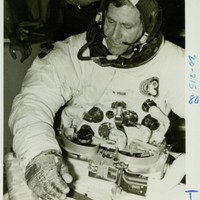
Command Module Pilot William R. Pogue (1930-2014) training for Skylab 4 (SL-4) at Lyndon B. Johnson Space Center in Houston, Texas. As Project Apollo was winding down and the final three missions (Apollo 18, Apollo 19, and Apollo 20) were canceled,…
Mating Apollo Command Module to the Service Module
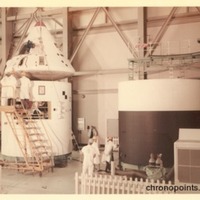
An early mating of a test Apollo Command Module to the Service Module in Hangar AF in the Cape Canaveral Air Force Station (CCAFS) industrial area. The Apollo Command Module was the crew cabin for the Apollo Command/Service Module (CSM). The CSM,…
Skylab 4 Crew at Patrick Air Force Base
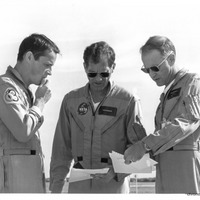
The Skylab 4 (SL-4) crew at Patrick Air Force Base for a press conference. In the first photograph appear, from left to right, Science Pilot Edward Gibson (1936-), Command Module Pilot William R. Pogue (1930-2014), and Mission Commander Gerald P.…
First Launch of Saturn I Booster
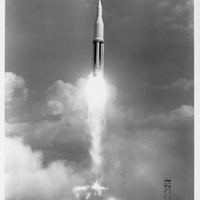
The first launch of the Saturn I (SA-1) booster from Launch Complex 34 at Cape Canaveral Air Force Station (CCAFS) in Cape Canaveral, Florida. Saturn I was the first heavy-lift dedicated space launcher used in the United States. The Saturn I rocket…
Skylab 4 Crew at John F. Kennedy Space Center
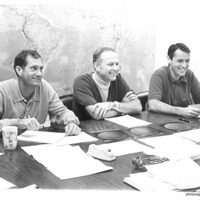
The Skylab 4 (SL-4) crew at a press conference at John F. Kennedy Space Center (KSC) in Merritt Island, Florida. Photographed from left to right are Command Module Pilot William R. Pogue (1930-2014), Mission Commander Gerald P. Carr (1932-), and…
Skylab 4 Astronaut Gerald P. Carr Undergoing Medical Exam
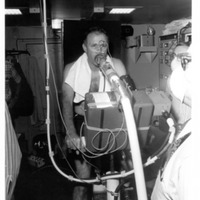
Skylab 4 (SL-4) Mission Commander Gerald P. Carr (1932-) undergoing a medical exam before launch at Lyndon B. Johnson Space Center in Houston, Texas. As Project Apollo was winding down and the final three missions (Apollo 18, Apollo 19, and Apollo…
Technicians Preparing an Apollo Spacecraft
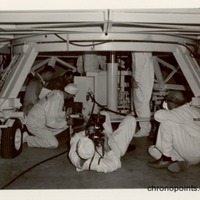
Technicians working under what is presumed to be a Command Module or a Service Module to prepare it for mating during Project Apollo at John F. Kennedy Space Center (KSC) in Merritt Island, Florida. The Apollo program was the third U.S. manned…
Skylab 4 Saturn IB Launch Vehicle Inspection at Launch Pad 39B
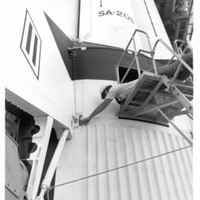
An inspection of Skylab 4's Saturn IB launch vehicle at Launch Pad 39B of John F. Kennedy Space Center (KSC) in Merritt Island, Florida. As Project Apollo was winding down and the final three missions (Apollo 18, Apollo 19, and Apollo 20) were…
Skylab 4 Astronaut Edward Gibson Undergoing Medical Exam
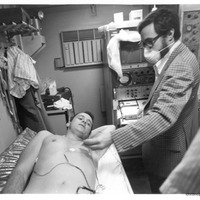
Skylab 4 (SL-4) Science Pilot Edward Gibson (1936-) undergoing a medical exam before launch at Lyndon B. Johnson Space Center in Houston, Texas. As Project Apollo was winding down and the final three missions (Apollo 18, Apollo 19, and Apollo 20)…
Skylab 4 Astronaut Edward Gibson
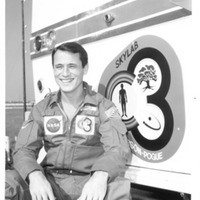
Skylab 4 (SL-4) Science Pilot Edward Gibson (1936-) in front of a transfer van at John F. Kennedy Space Center (KSC) in Merritt Island, Florida. As Project Apollo was winding down and the final three missions (Apollo 18, Apollo 19, and Apollo 20)…
Skylab 4 Astronaut Gerald P. Carr
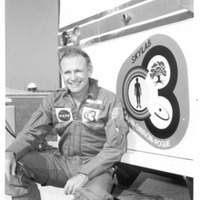
Skylab 4 (SL-4) Mission Commander Gerald P. Carr (1932-) in front of a transfer van at John F. Kennedy Space Center (KSC) in Merritt Island, Florida. As Project Apollo was winding down and the final three missions (Apollo 18, Apollo 19, and Apollo…
Skylab 4 Astronaut William R. Pogue
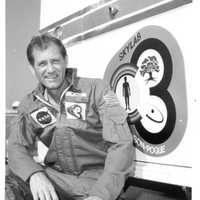
Skylab 4 (SL-4) Command Module Pilot William R. Pogue (1930-2014) in front of a transfer van at John F. Kennedy Space Center (KSC) in Merritt Island, Florida. As Project Apollo was winding down and the final three missions (Apollo 18, Apollo 19, and…
Skylab 4 Saturn IB at Launch Pad 39B
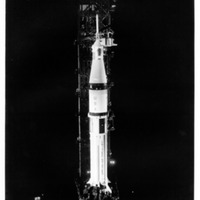
The Skylab 4 (SL-4) Saturn IB launch vehicle at Launch Pad 39B of John F. Kennedy Space Center (KSC) in Merritt Island, Florida. As Project Apollo was winding down and the final three missions (Apollo 18, Apollo 19, and Apollo 20) were canceled, the…
Apollo Departs VAB
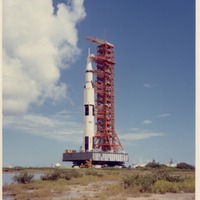
The crawler-transporter-transporter moving a Saturn V to the launch pad at John F. Kennedy Space Center's Launch Complex 39 (LC-39). The National Aeronautics and Space Administration (NASA) had previously assembled launch vehicles at the pad,…
Skylab 4 Liftoff
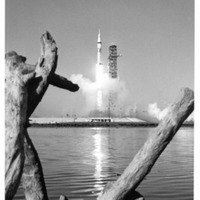
The liftoff of Skylab 4 (SL-4) from Launch Pad 39B of John F. Kennedy Space Center (KSC) in Merritt Island, Florida. As Project Apollo was winding down and the final three missions (Apollo 18, Apollo 19, and Apollo 20) were canceled, the National…
Apollo 17 Splashdown
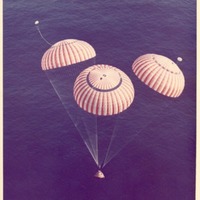
Project Apollo ended here in the Pacific Ocean with the splashdown of Apollo 17 on December 19, 1972. One December 7, Apollo 17 became the first night launch of an American human spaceflight and was also the last manned launch of a Saturn V rocket.…
Skylab Space Station as Seen From Skylab 4 CSM
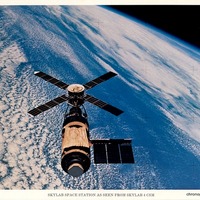
A view of the Skylab Space Station from the Skylab 4 (SL-4) Command/Service Module (CSM). As Project Apollo was winding down and the final three missions (Apollo 18, Apollo 19, and Apollo 20) were canceled, the National Aeronautics and Space…
Apollo-Saturn IB Launch Vehicle of Skylab 3 Sits on Launch Pad 39B
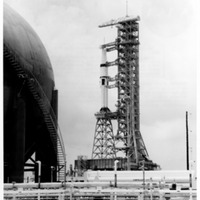
The Apollo-Saturn IB Launch Vehicle of Skylab 3 (SL-3) at Launch Pad 39B of John F. Kennedy Space Center (KSC) in Merritt Island, Florida. As Project Apollo was winding down and the final three missions (Apollo 18, Apollo 19, and Apollo 20) were…
Apollo 13 at Launch Complex 39A
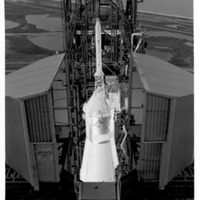
The famous and ill-fated Apollo 13 spacecraft at Launch Complex 39A (LC-39A) of John F. Kennedy Space Center (KSC) in Merritt Island, Florida. The mission was crewed by Mission Commander Jim Lovell (1928-), Lunar Module Pilot Fred Haise (1933-), and…
Astronaut Wally Schirra
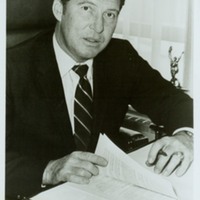
Wally Schirra (1923-2007) was the only astronaut to fly on Mercury, Gemini, and Apollo spacecraft. A Mercury Seven astronaut, Schirra flew on Sigma 7 (also known as Mercury-Atlas 8), Gemini 6A as Command Pilot with Thomas Stafford as Pilot, and Earth…
Apollo-Saturn V Launch Vehicle on Launch Pad 39A
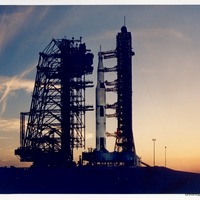
An Apollo-Saturn V booster next to the service tower at John F. Kennedy Space Center's Launch Complex 39A in Merritt Island, Florida. The Saturn V was the most powerful launch vehicle ever used, with 7.7 million pounds of thrust. The rocket was used…
Saturn V on Launch Pad 39A
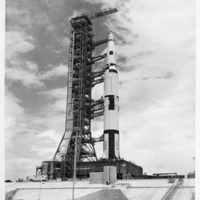
A Saturn V booster next to the service tower at John F. Kennedy Space Center's Launch Complex 39A in Merritt Island, Florida. The Saturn V was the most powerful launch vehicle ever used, with 7.7 million pounds of thrust. The rocket was used by the…
Saturn I Booster with Boilerplate Apollo Command/Service Module
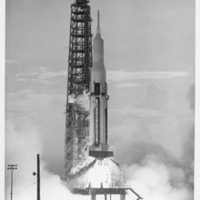
A Saturn I launching from Launch Complex 37 of Cape Canaveral Air Force Station (CCAFS) in Cape Canaveral, Florida. Saturn I was the first heavy-lift dedicated space launcher used in the United States. The Saturn I rocket was designed to launch…
First Launch of Apollo-Saturn Configuration
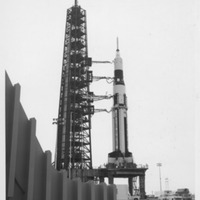
The first Apollo-Saturn launch vehicle as it sat on Launch Pad 37B at Cape Canaveral Air Force Station (CCAFS) in Cape Canaveral, Florida, before its launch on May 28, 1964. Saturn I was the first heavy-lift dedicated space launcher used in the…
Saturn IB Launch
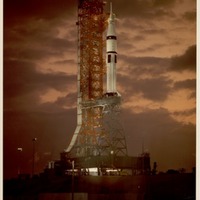
A Saturn IB on the launch adapter of the mobile launcher at Launch Complex 39 (LC-39) of John F. Kennedy Space Center (KSC) in Merritt Island, Florida. This was one of the last Saturn IB boosters to launch from KSC as it was either a Skylab mission…
Saturn I Booster Test Flight Launch
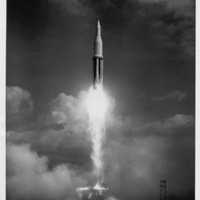
One of the first three test flights of the Saturn I booster. Here, it is depicted as it has lifted off from Launch Complex 34 at Cape Canaveral Air Force Station (CCAFS) in Cape Canaveral, Florida. Saturn I was the first heavy-lift dedicated space…
Apollo 8 on Launch Pad 39A
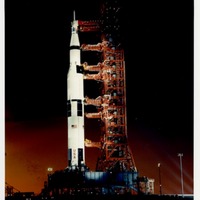
Apollo 8 (AS-503) on Launch Pad 39A of John F. Kennedy Space Center (KSC) in Merritt Island, Florida. Apollo 8 was the first manned launch of a Saturn V booster and mission to leave Earth orbit. It launched on December 21, 1968, with Commander Frank…
President Richard Nixon and First Lady Pat Nixon at Patrick Air Force Base
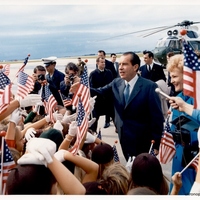
President Richard Nixon (1913-1994) accompanied by his wife, Pat Nixon (1912-1993), greeting citizens at Patrick Air Force Base with Marine One in the background. Nixon arrived with his wife and his daughter, Patricia "Tricia" Nixon (1946-), to watch…
Apollo Command/Service Module Launch for Apollo-Soyuz Test Project
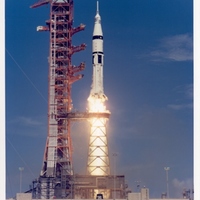
The Apollo Command/Service Module (CSM) launching from Saturn IB for the Apollo-Soyuz Test Project (ASTP). On the final Apollo flight, a Saturn IB lifted the spacecraft aloft from Launch Complex 39B (LC-39B) at John F. Kennedy Space Center (KSC) in…
Apollo Soyuz Test Project Prime Crewmen
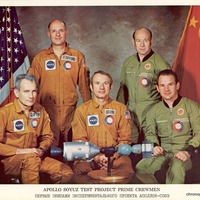
The American and Soviet crews of the Apollo–Soyuz Test Project (ASTP). The Apollo crew consisted of Docking Module Pilot Deke Slayton (1924-1993) (1924-1993), Mission Commander Thomas Stafford (1930-), and Command/Service Module Pilot Vance de.…
Apollo Soyuz Test Project
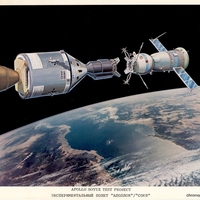
An artist's rendering of the Apollo–Soyuz Test Project (ASTP). The Apollo crew consisted of Docking Module Pilot Deke Slayton (1924-1993) (1924-1993), Mission Commander Thomas Stafford (1930-), and Command/Service Module Pilot Vance de. Brand. The…
Jim Lovell in the White Room Before Boarding Apollo 8
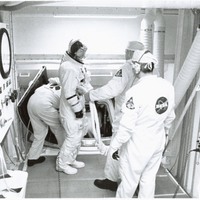
Command Module Pilot Jim Lovell (1928-) speaking to the closeout crew in the white room before entering the Apollo 8 (AS-503) capsule. Apollo 8 was the first manned launch of a Saturn V booster and mission to leave Earth orbit. It launched on…
Frank Borman During Suit Test for Apollo 8
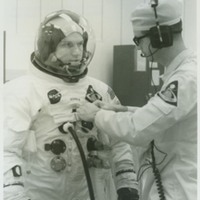
Apollo 8 (AS-503) Commander Frank Borman (1928-) during a suit test at John F. Kennedy Space Center (KSC) in Merritt Island, Florida. Apollo 8 was the first manned launch of a Saturn V booster and mission to leave Earth orbit. It launched on December…
Apollo 8 Astronauts on the USS Yorktown After Splashdown
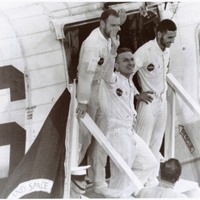
The crew of Apollo 8 (AS-503) stepping off of the recovery helicopter on the carrier USS Yorktown in the Pacific Ocean. Photographed from left to right are Jim Lovell (1928-), Frank Borman (1928-), and William Anders (1933-), who had just completed…
Astronaut Frank Borman Jogging
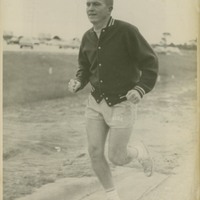
Apollo 8 (AS-503) astronaut Frank Borman (1928-) jogging at John F. Kennedy Space Center (KSC) in Merritt Island, Florida. Borman would command the mission launched three days after this photograph was taken. Apollo 8 was the first manned launch of a…
Astronaut William Anders During Suit Test for Apollo 8
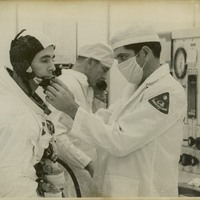
Apollo 8 (AS-503) astronaut William Anders (1933-) during a suit test at John F. Kennedy Space Center (KSC) in Merritt Island, Florida. Anders was scheduled to be the Lunar Module Pilot, but because of production delays, the Lunar Module (LM) was not…
Astronaut Jim Lovell During Suit Test for Apollo 8
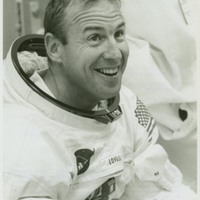
Apollo 8 (AS-503) astronaut Jim Lovell (1928-) during a suit test at John F. Kennedy Space Center (KSC) in Merritt Island, Florida. Apollo 8 was the first manned launch of a Saturn V booster and mission to leave Earth orbit. It launched on December…
Astronaut Frank Borman During a Simulated Altitude Chamber Test
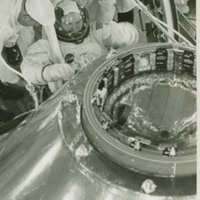
Apollo 8 (AS-503) astronaut Frank Borman (1928-) entering the capsule during a simulated altitude chamber test at the Manned Spacecraft Operations Building (MSOB) (MSOB) at John F. Kennedy Space Center (KSC) in Merritt Island, Florida. Apollo 8 was…
Apollo 7 Liftoff
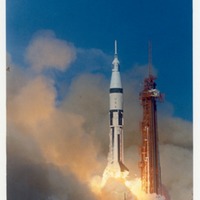
Apollo 7 launch from Cape Canaveral Air Force Station (CCAFS) atop a Saturn IB booster on October 11, 1968. It was an Earth orbital mission, which tested the improved Block 2 Command/Service Module (CSM). It was the first time the Apollo CSM had…
Apollo 7 Launch
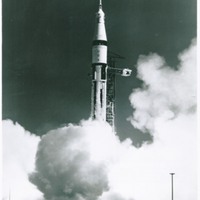
Apollo 7 launch from Cape Canaveral Air Force Station (CCAFS) atop a Saturn IB booster on October 11, 1968. It was an Earth orbital mission, which tested the improved Block 2 Command/Service Module (CSM). It was the first time the Apollo CSM had…
Skylab 4 Astronaut Edward Gibson Undergoing Medical Exam
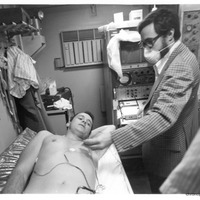
Skylab 4 (SL-4) Science Pilot Edward Gibson (1936-) undergoing a medical exam before launch at Lyndon B. Johnson Space Center in Houston, Texas. As Project Apollo was winding down and the final three missions (Apollo 18, Apollo 19, and Apollo 20)…
Saturn IB Booster for Apollo 7
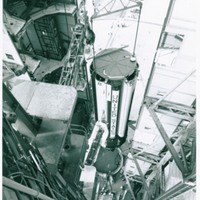
The Saturn IB used for the Apollo 7 launch from Cape Canaveral Air Force Station (CCAFS) in Cape Canaveral, Florida, on October 11, 1968. It was an Earth orbital mission, which tested the improved Block 2 Command/Service Module (CSM). It was the…
Apollo 7 Astronauts After Splashdown
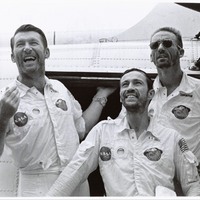
Mission Commander Wally Schirra (1923-2007), Command Module Pilot Donn F. Eisele (1930-1987), and Lunar Module Pilot Walter Cunningham (1932-) exiting the recovery helicopter aboard the USS Essex in the Atlantic Ocean. Apollo 7 launched from Cape…
Skylab 4 Astronaut William R. Pogue
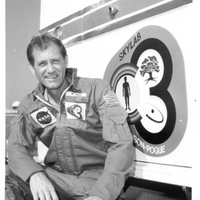
Skylab 4 (SL-4) Command Module Pilot William R. Pogue (1930-2014) in front of a transfer van at John F. Kennedy Space Center (KSC) in Merritt Island, Florida. As Project Apollo was winding down and the final three missions (Apollo 18, Apollo 19, and…
Apollo 7 Astronauts in Space
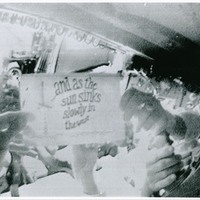
Mission Commander Wally Schirra (1923-2007), Command Module Pilot Donn F. Eisele (1930-1987), and Lunar Module Pilot Walter Cunningham (1932-) holding up a sign during the last television transmission from Earth orbit. Apollo 7 launched from Cape…
Apollo 7 Astronauts Boarding a Transfer Van
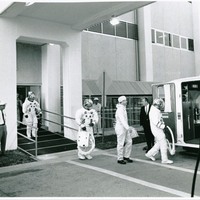
Mission Commander Wally Schirra (1923-2007), Command Module Pilot Donn F. Eisele (1930-1987), and Lunar Module Pilot Walter Cunningham (1932-) boarding a transfer van before liftoff at Cape Canaveral Air Force Station (CCAFS) in Cape Canaveral,…
Skylab 4 Liftoff
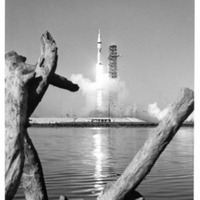
The liftoff of Skylab 4 (SL-4) from Launch Pad 39B of John F. Kennedy Space Center (KSC) in Merritt Island, Florida. As Project Apollo was winding down and the final three missions (Apollo 18, Apollo 19, and Apollo 20) were canceled, the National…
Astronauts Load into Transfer Van for Apollo 7 Launch Demonstration Test
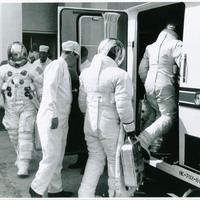
Mission Commander Wally Schirra (1923-2007), Command Module Pilot Donn F. Eisele (1930-1987), and Lunar Module Pilot Walter Cunningham (1932-) boarding a transfer van for a Launch Demonstration Test at Cape Canaveral Air Force Station (CCAFS) in Cape…
Apollo 7 Crew and Support Team
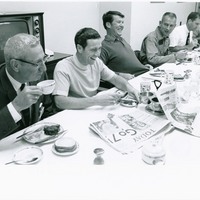
The Apollo 7 crew and support team having breakfast at John F. Kennedy Space Center (KSC) in Merritt Island, Florida, before liftoff on October 11, 1968. Apollo 7 was an Earth orbital mission, which tested the improved Block 2 Command/Service Module…
Apollo 17 Crew in Front of Launch Pad
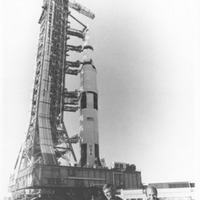
Apollo 17 astronauts in front of a Saturn V launch vehicle being moved by crawler-transporter from the Vehicle Assembly Building (VAB) to Launch Complex 39A at John F. Kennedy Space Center (KSC) in Merritt Island, Florida. Photographed from left to…
Apollo 17 on the Launch Pad
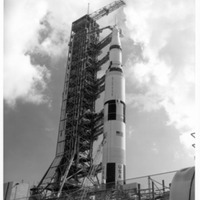
The massive Saturn V launch vehicle at Launch Complex 39A of John F. Kennedy Space Center (KSC) in Merritt Island, Florida. On December 7, 1972, Apollo 17 became the first night launch of an American human spaceflight and was also the last manned…
Astronaut Eugene Cernan With Wife and Daughter
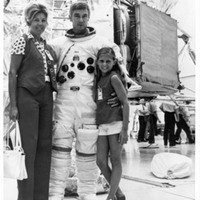
Apollo 17 Mission Commander Eugene Cernan (1934-) with his wife, Barbara Cernan, and his daughter, Teresa Cernan, after a lunar landing training session at John F. Kennedy Space Center (KSC) in Merritt Island, Florida. On December 7, 1972, Apollo 17…
Apollo 17 Crew on a Lunar Rover
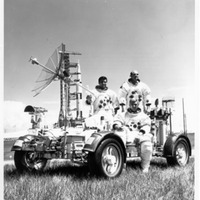
The crew of Apollo 17, Lunar Module Pilot Harrison Schmitt (1935-), Command Module Pilot Ronald Evans (1933-1990), and Mission Commander Eugene Cernan (1934-), with a lunar rover at Launch Complex 39A (LC-39A). with the Saturn V booster and Apollo…
Apollo 17 Splashdown
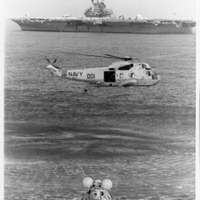
Command Module Pilot Ronald Evans (1933-1990) exiting the Apollo 17 capsule to join Lunar Module Pilot Harrison Schmitt (1935-) in the recovery dinghy after splashdown in the Pacific Ocean on December 19, 1972. Apollo 17 was the final mission of…
Apollo 17 Crew Boarding a Transfer Van
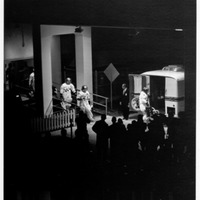
The Apollo 17 crew, consisting of Lunar Module Pilot Harrison Schmitt (1935-), Command Module Pilot Ronald Evans (1933-1990), and Mission Commander Eugene Cernan (1934-), exiting the Manned Spacecraft Operations Building (MSOB) (MSOB) at John F.…
Astronaut Harrison Schmitt During Training
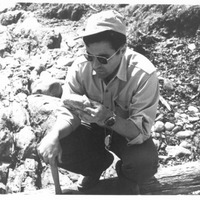
Lunar Module Pilot Harrison Schmitt (1935-), the only geologist to travel to the Moon, examining a rock while training for Apollo 17's Moon mission. Schmitt was the only geologist to travel to the Moon. On December 7, 1972, Apollo 17 became the first…
Astronaut Harrison Schmitt on the Moon
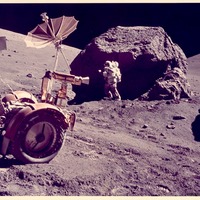
Lunar Module Pilot Harrison Schmitt (1935-), the only geologist to travel to the Moon, working beside a boulder on the Moon during an Extra Vehicular Activity (EVA). On December 7, 1972, Apollo 17 became the first night launch of an American human…
Space Shuttle Main Engine (SSME) Test
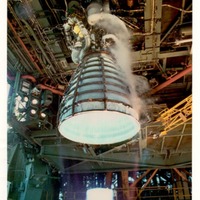
After the Space Shuttle Challenger disaster, many systems were upgraded to return the Space Shuttles to flight. As part of those upgrades, the main engines were redesigned and then tested by a static firing at John C. Stennis Space Center in Hancock…