The Rise of Cogeneration and Independent Power Markets
Meanwhile, back in the United States and back to the 1970s, it had earlier been shown how the American market for gas turbines enjoyed a substantial boom for simple cycle peaking units following the Great Northeast Blackout of 1965. That led to the advent, around 1970, of the popular pre-engineered combined cycle plant, such as the Westinghouse PACE and GE Steam and Gas (STAG) plants, which enjoyed much early success in the early 1970s. There was much promise sustained growth in the gas turbine business.
The breakout of the Yom Kippur War in 1973 changed all of that. Coincidentally, that was the same year that this writer left a comfortable job in Steam Turbine Engineering to respond to a job posting in the Advanced Energy Programs section, under Bob Strong, of Gas Turbine Marketing.
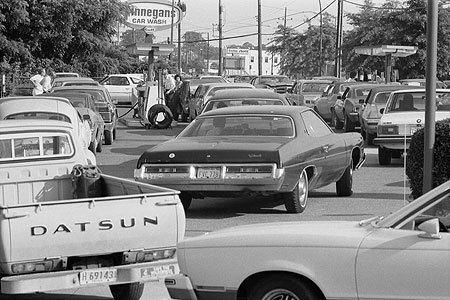
Following the war, the Organization of Arab Petroleum Exporting Countries (OAPEC) imposed an embargo against the United States, and other countries in Europe and South Africa, in retaliation for the U.S. decision to re-supply the Israeli military.
The almost immediate result of the embargo was a severe shortage, and a steep rise in the global price, of oil and oil products. The United States had become increasingly dependent on imported oil and the embargo caused a major disruption of the national economy. First, President Richard Nixon's administration, then the short-lived administration of President Gerald Ford, and, finally, that of President Jimmy Carter, all developed plans to increase domestic production and reduce the use of imported oil.
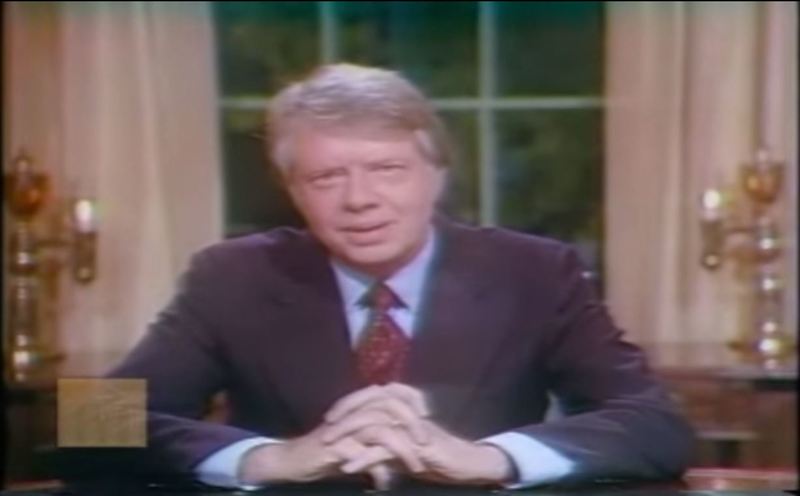
At the same time, during the President Carter's administration, there was a strong concerted move in the natural gas industry for deregulation, and a supply shortage of pipeline gas was created to punctuate their position. Does anyone remember President Carter visiting factories in Pittsburgh, where everyone was wearing coats indoors due to lack of heat? Does anyone remember bumper stickers seen in Houston—LTBFITC (Let The Bastards Freeze In The Cold)?
A direct result of all of this tumult in the energy supply chain was Jimmy Carter's National Energy Plan and a declaration of Energy Independence. Legislation was introduced in Congress aimed at establishing strict prohibitions and regulations aimed at achieving reductions in the use of both imported oil and natural gas. It should be noted that this is being written at time of a glut of both oil and natural gas in the United States.
There was clearly a strong pro-coal-leaning in Congress, and coal, as our most abundant domestic energy source, was being promoted as offering the way to achieve independence from imported oil. "King Coal" was in the driver’s seat, and the future of coal-fired power generation seemed assured in spite of the environmental laws and regulations that had been passed only a few years earlier.
After months and months of debate—a lot of which this writer witnessed in person—the National Energy Act (NEA) of 1978 was passed and proudly signed into law by President Carter. Two of the major provisions of the new energy legislation had profound impacts on the gas turbine industry:
- The Fuel Use Act (FUA), which, among other things, prohibited the use of oil and natural gas as fuel for new base load power plants. Only "alternative fuels," such as coal and coal-derived fuels, were allowed for that purpose. Again, in today’s environment, can anyone imagine? Peaking units and intermediate-load combined cycle power plants (<3500 hours per year operation) were exempt from the prohibitions of the Fuel Use Act, as were "cogeneration facilities."
- Second, the Public Utility Regulatory Policies Act (PURPA), which had a lot to do with the deregulation of the electric utility industry and, among other things, established rules requiring electric utilities to purchase power from non-utility generators (NUG). Such NUGs, however, also had to deliver some amount of thermal energy to an industrial process plant, such as the requirement that the generating unit be "qualified" as a cogeneration facility. Thereby, such a facility was defined as a qualifying facility (QF).
Clearly, these new energy laws were about to have great impact on the American gas turbine market, but, from this writer’s perspective, Westinghouse was not properly oriented to benefit from them. On the contrary, Westinghouse was more tuned into their negative impacts than their potential positive impacts.
Since this writer was designated as the Gas Turbine System Division's "Man in Washington" at the time, there are some interesting observations from personal experience that can be contributed to this aspect of the history of Westinghouse gas turbines.