The Saudi Arabian Market Develops
In 1969, two W191 (17,000kW) gas turbines were sold for installation in East Dammam, Saudi Arabia. These units were built by the Dutch company Werkspoor. This appears to be the first Westinghouse gas turbines sold in the Saudi market and represented the beginning of a very important relationship with what ultimately developed into one of the key markets for large 60Hz gas turbines in the world.
As Saudi Arabia developed from the days after World War II to the major supplier of oil, both American and British influences came into play in electrification of this desert country, as well as other parts of the Middle East. Under British and European influence, the power systems being developed in the region operated at 50Hz. Under American influence, regional generation, transmission, and distribution were developed as a 60Hz system. Saudi Arabia is the only country in the Middle East with a large 60Hz system.
For Westinghouse, which did not develop its own large 50Hz direct-drive gas turbine product line, it was fortunate that the main influence in the electrification of the most populated and industrialized part of Saudi Arabia was carried out under the control of Aramco, the Arabian-American Oil Company (now Saudi Arabian Oil Company, or Saudi Aramco), the major oil producing and refining American-Saudi joint venture company. Moreover, it was important that the major purchasing operation for Aramco was located Houston, Texas. Later, the power system developed by Aramco was incorporated into various regional facilities of the Saudi Consolidated Electric Company (SCECO).
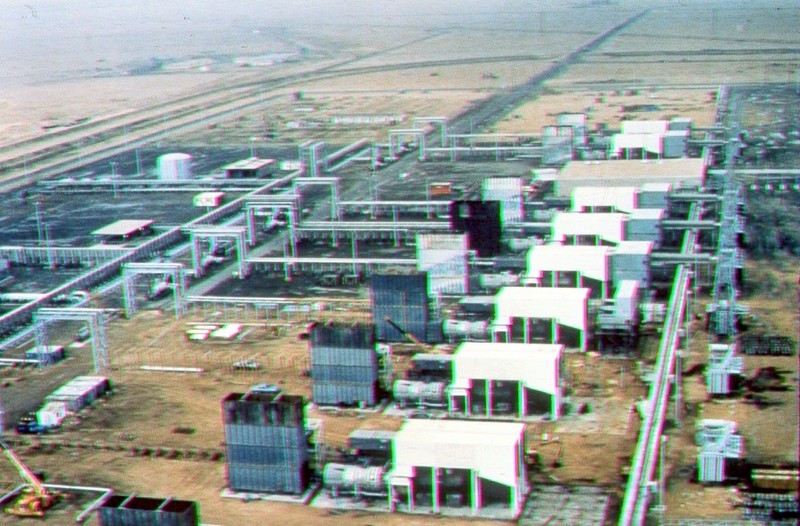
By the mid-1970s, with Aramco buying most of the turbine generators equipment for electrification, Saudi Arabia became a major market for large 60Hz gas turbines. Ironically, this huge Saudi market materialized just as the American market for gas turbines and combined cycle plants all but evaporated, in large part due to the Arab Oil Embargo of 1973-1974, and subsequent energy legislation passed by Congress and President Jimmy Carter's administration in 1978.
Needless to say, competition from GE and others for the Saudi and Aramco business was fierce. Westinghouse's ability to capitalize on the opportunity and gain its share of the market was due in part to the availability of shop inventory due to many cancellations of orders that came with the slowdown in the domestic market. The story goes that material for more than 50 W251 and W501D units were ordered in anticipation of continued American market in early 1973. Also to be credited are the talents of Westinghouse's engineering department, projects management, and sales team, as well as the support of Power Systems International and the field sales office in Houston, Texas. The efforts of Sales Manager Shyam Sujan, under Marketing Manager Jack Pope and Generation Systems Division General Manager Joe Stadelman, are hereby acknowledged.