Pioneering Power Generation Applications
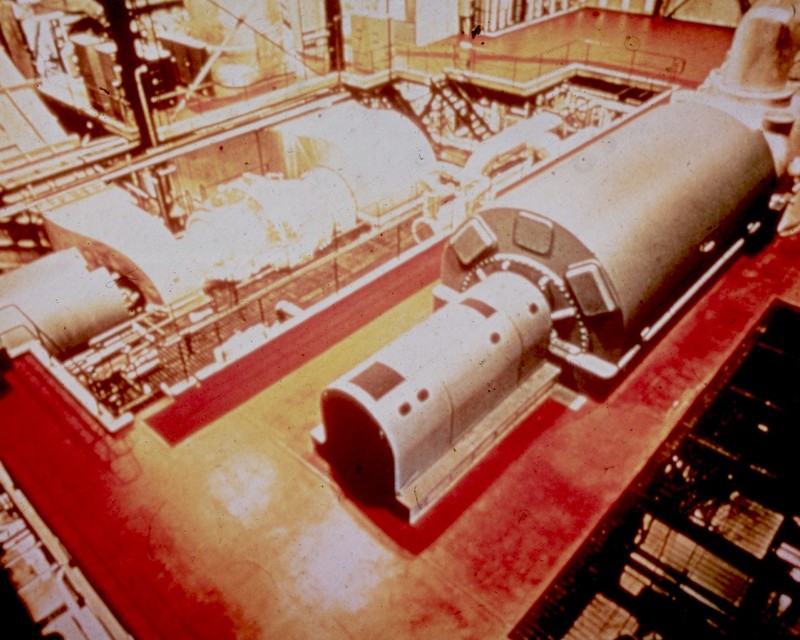
Westinghouse needed to find a good first application in the power generation industry, which, after all, was the primary focus of its business. If the gas -turbine side of the business was to grow and thrive, it had to find its way into the power generation sector.
In 1952, West Texas Utilities, Stockton, Texas, helped pioneer power generation application of gas turbines with the installation of a Westinghouse model W81, rated at 5000kW. That was followed by a second W81 in 1954 or 1958 (sources vary on the date). Both units were used in continuous (base load) operation and the exhaust heat from the second unit was used to heat feed water for a steam boiler at the site. In 1959, it was integrated with a fired boiler to form a “combined cycle” (gas and steam) power generating system.
Five years later, in 1964, the same utility installed the first pre-engineered combined cycle power plant at its power station in San Angelo, Texas. The Westinghouse gas turbine used for that application was a supercharged model W301, nominally rated at 25MW. The rating on the steam turbine was 85MW, for an overall combined cycle plant output of about 110MW, and the thermal efficiency achieved was more than 39 percent, the record for gas-fired power plants in the U.S. for quite some time.
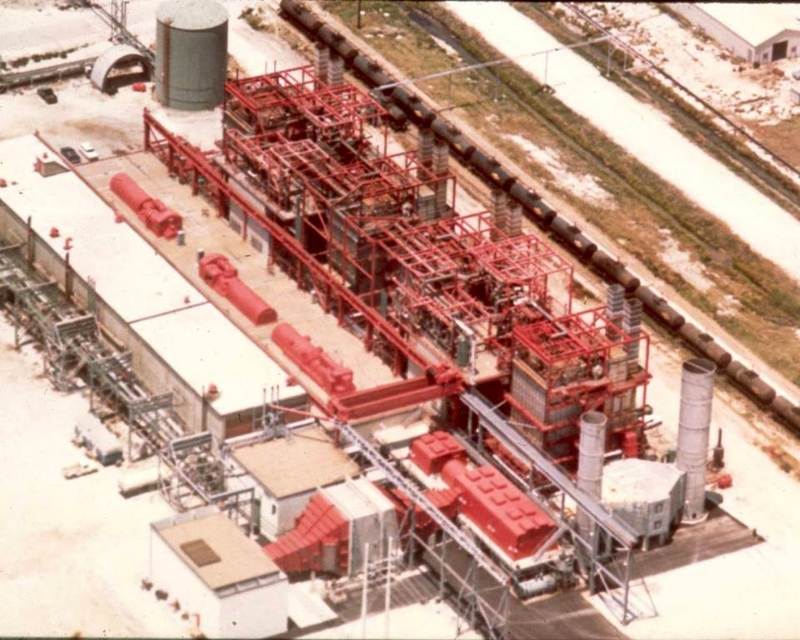
The W301, the first Westinghouse direct-drive (3600RPM) unit, was the immediate predecessor of the model W501, introduced in 1967-1968 with an initial rating of 40MW (ISO/gas). Note: some ratings listed in early publications used National Electrical Manufacturers Association (NEMA) site conditions, i.e., 1000-foot elevation and 85F, which reduces power output by 7.5 percent below that at ISO (sea level, 15C or 59F) conditions.
The first five production W501 engines were installed during 1968 to 1971 to supply power and steam at Dow Chemical Company facilities in Texas and Louisiana. The fact that Dow had previously installed four W301 units at its Texas Division in Freeport, Texas, was key to their decision to go ahead with the follow-on orders for the larger W501 units.
In fact, the prototype supercharged W301 installed at Freeport in 1965 was Dow’s first venture into gas turbines for on-site power generation, and Westinghouse remained a major supplier of Dow’s gas turbines for years to come.
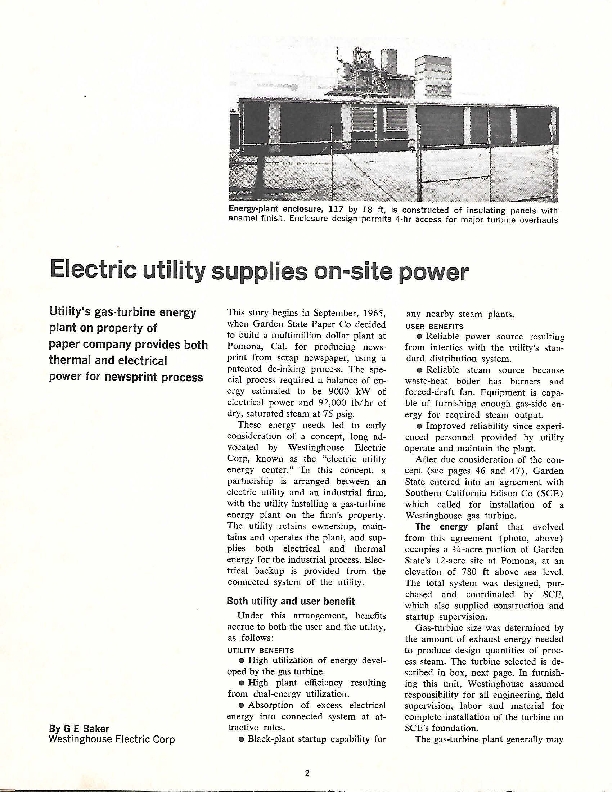
In 1967, Westinghouse supplied a 15MW W191 pre-packaged gas turbine generator for a pioneering on-site industrial combined heat and power (CHP) or "cogeneration" application. The Southern California Edison Company (SCE) partnered with the Garden State Paper Company (GSP) to install and operate an on-site gas-turbine generator and heat recovery system to supply all the energy needs of a patented de-inking process to produce clean newsprint from used newspapers.
This unique early example of a "total-energy" system provided the operating flexibility, operating economics, site compatibility, and reliability to make it the ideal solution for both partners. SCE supplied both electricity and heat energy, while GSP enjoyed the advantage of low cost, reliable on-site energy located at the process plant. The gas turbine generator was electrically tied to the SCE grid, which took the excess power generated. Henry Vogt Company supplied the fired heat recovery boiler with a standby forced draft fan for backup duty. The plant went commercial in January 1967.