Appendix IV:Westinghouse Low-Btu Gas Experience: A Brief History
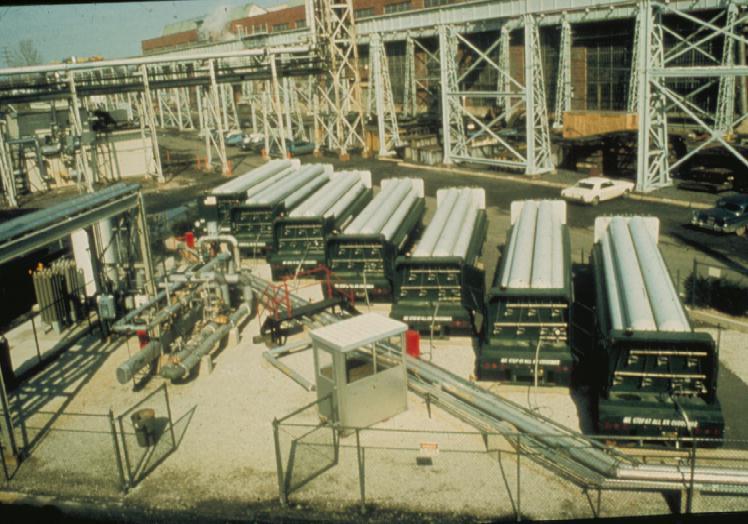
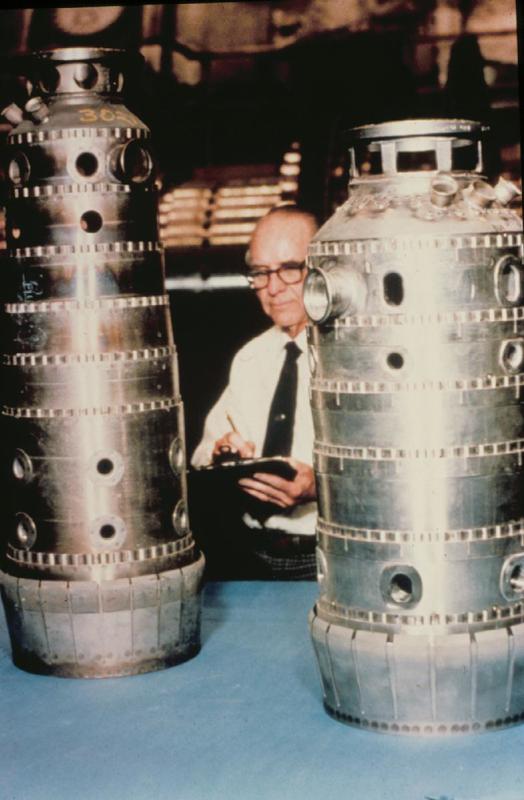
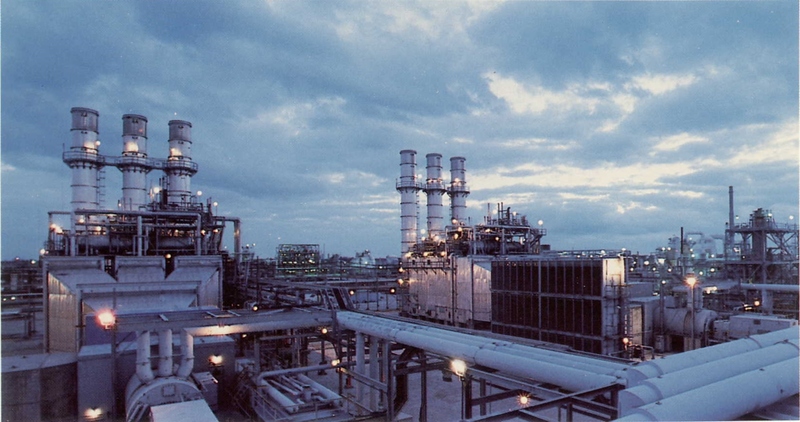
As indicated in the body of this brief history, Westinghouse gas turbine engineers participated in a U.S. Department of Energy (DOE) contract during the early 1970s to burn low-Btu gas in a modern gas turbine. Around 1980, this work led to the design of the W501D5 combustion system to be able to be readily converted to burning low heating value gas by simply changing fuel nozzles, piping, and valves. This was believed to be a factor in the selection of Westinghouse to supply two W501D5 units to Dow Chemical for their facility in Plaquemine, Louisiana, where they planned on building a government supported coal gasifier to produce gas from coal on a commercial scale. As part of the DOE contract, Westinghouse performed full-scale testing of a W501B combustor basket burning synthesized low heating value coal gas delivered to the Lester plant in tube trailers.
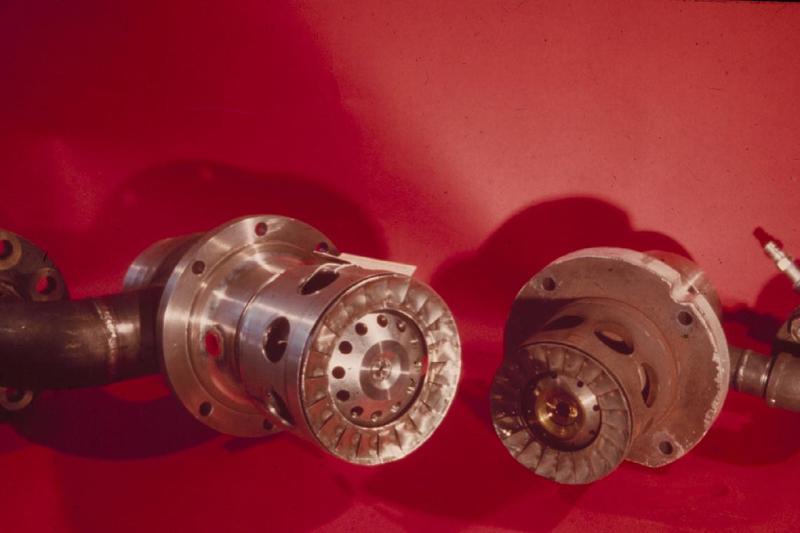
The substantial difference in fuel nozzle design is evident in the second photograph to the right, where an old W501B nozzle for natural gas is shown next to a new low-Btu gas nozzle. The low-heating value fuel test gas had only about one-tenth of the energy content of natural gas—100 Btu versus 1000 Btu per scf)—requiring 10 times the nozzle flow area. When the new W501D5 was introduced in 1980, the combustor basket design clearly showed evidence of what was learned under the DOE test program.
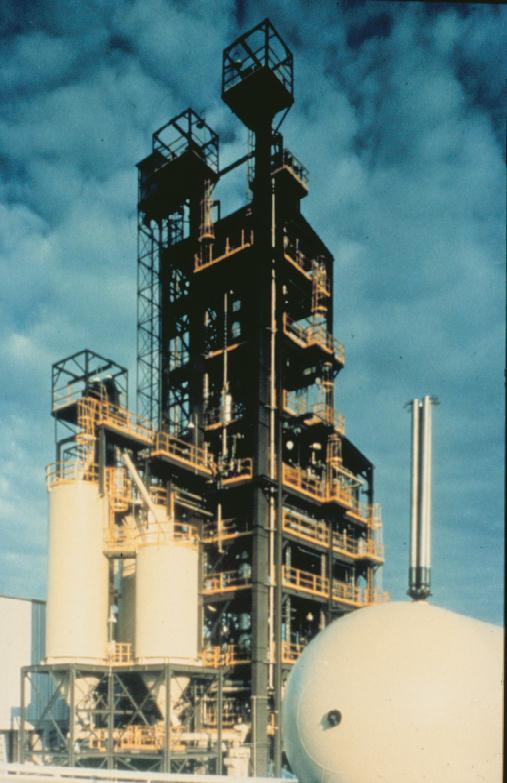
The DOE program under which Westinghouse performed low-Btu gas testing was aimed at the development and demonstration of the Westinghouse Gasification Process. A Process Development Unit (PDU) was built and operated at Waltz Mill, PA. After the Westinghouse contract expired, the process was sold to Kellogg-Rust Engineering and a full-scale demonstration (~80MW) was funded under a later DOE program. Unfortunately, the project never produced any useful syngas, and the GE Frame 6F purchased under the program operated only on natural gas.
Along with Dow Chemical, Westinghouse worked to modify twoW01D5 to burn synthetic gas produced by their on-site gasifier. As a first step, Westinghouse supplied modified a 15MW W191 at the site to convert it for a feasibility demonstration test on low-Btu gas.
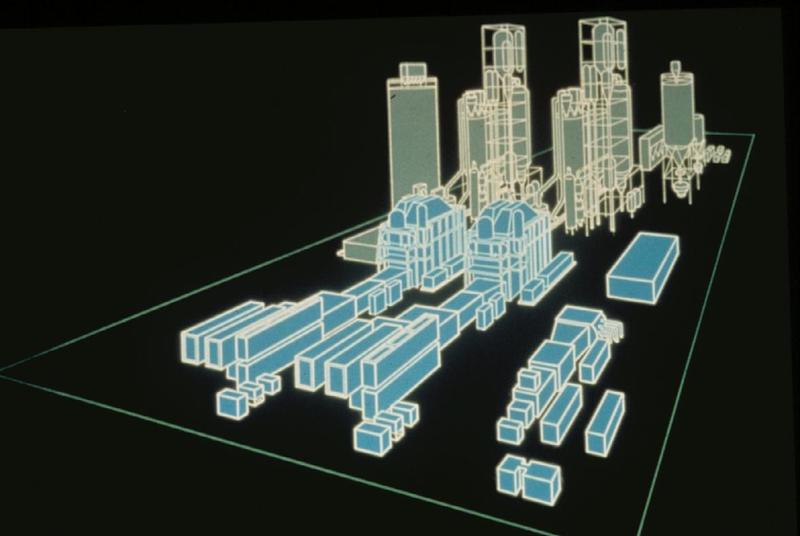
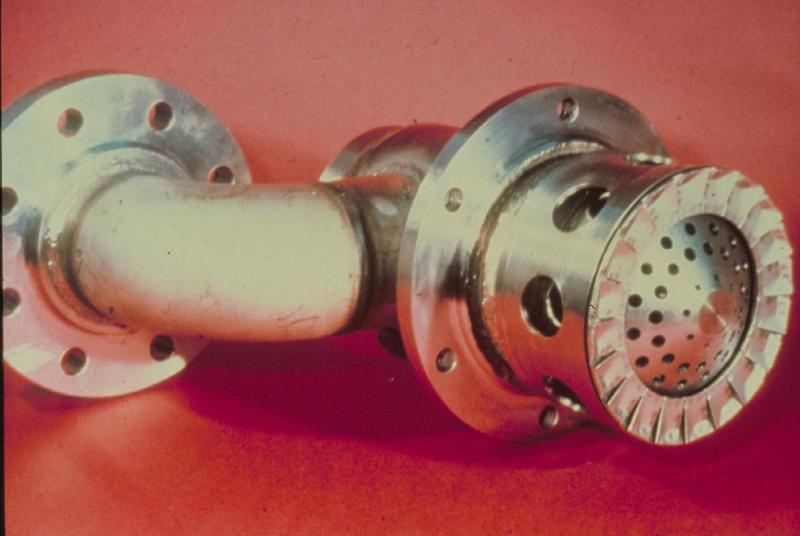
To the right is a dual-fuel nozzle for conversion of a 15MW W191 to burn low-Btu coal-derived syngas for proof-of-concept demonstration of Dow gasifier at the Dow Chemical facility in Plaquemine, Louisiana. Dow claimed this conversion was the first of its kind in 1981.
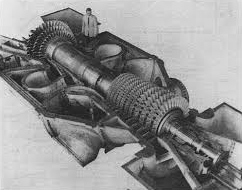
Note is added here to acknowledge the pioneering low-Btu gas combustion work by Westinghouse gas turbine engineers in the unique application of a W201 installed at U.S. Steel works in Chicago, Illinois around 1960. The engine was used to drive a 12,500 scfm blower for a blast furnace and the project requirement was to use blast furnace gas for its fuel. The engine was modified for all compressor discharge to be removed and fed to an external burner, from which products of combustion were returned to drive the turbine. Typically, blast furnace gas has a heating value of less than 100 Btu/scf, one-tenth of that of natural gas.