Westinghouse PACE (Power At Combined Efficiencies) Combined Cycle Power Plants
As in the case of the simple cycle gas turbine pre-engineered and packaged plant, Westinghouse also introduced the idea of a pre-engineered combined cycle plant. Around 1970, a design group was organized under the leadership of Paul Berman, the Manager of PACE (Power At Combined Efficiencies) Engineering, and the Marketing and Sales team went into high gear with an all-out promotion campaign. A copy of the PACE brochure can be seen here.
A thermal cycle concept was developed around the use of two 75MW W501B gas turbines and a new 100MW single case steam turbine specifically designed for the application. The plant was called the PACE Plant and the first design was dubbed the PACE 260 to reflect the nominal power rating of the plant.
The PACE design was geared towards the "intermediate load" market between peaking and base load, where there was a growing need to install capacity that was more economical to install than base load used for coal and nuclear plants and more economical to operate than simple cycle gas turbines. The equipment had to also be flexible enough to be able to withstand the stresses of daily start-and-stop operating duty. Special provisions were made throughout the design to accommodate this cycling mode of operation.
The PACE 260 concept—and later the upgraded PACE 320—was captured in this image depicting the thermodynamic cycle behind the plant design. As can be seen the original concept included supplemental duct firing of the two-pressure heat recover boilers, which were a vertical flow design configuration. The basic configuration was described as a 2-on-1 design, meaning that two gas turbines produced steam to feed one steam turbine.
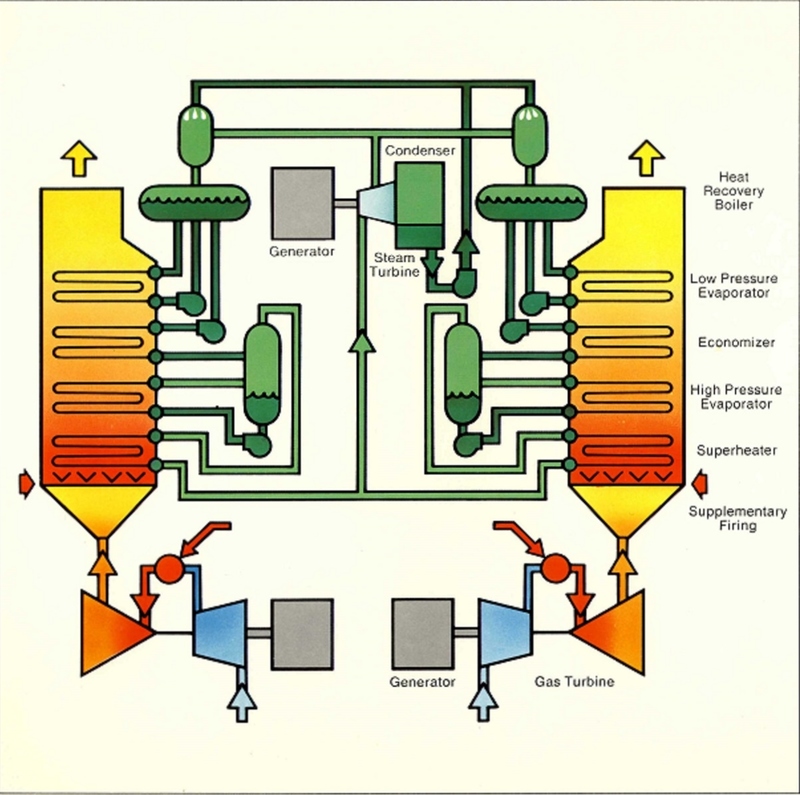
Supplemental firing was utilized to increase steam production so as to fill the 100MW single-case steam turbine. In the initial design, approximately 20 percent of the fuel input was fired in the duct burner. Without supplemental firing, there is typically adequate energy in the exhaust of the gas turbine to generate enough steam to produce about 50 percent of the gas turbine power, or, in this case, only 75MW.
In this way, the original PACE plant design had built-in steam turbine capacity to enable the water/steam side of the plant to remain essentially the same as the gas turbine power rating evolved through to the 100MW-plus W501D5, when the rating of the plant was 300MW without supplemental firing.
The PACE 260 was initially offered with a heat rate of about 8,100 Btu/kWh with 42 percent efficiency Lower Heating Value (LHV) on natural gas fuel.
The upgraded PACE 320 based on the W501D, had a nominal 300MW rating and a heat rate of 7,530 Btu/kWh (45 % efficiency) LHV on natural gas fuel.
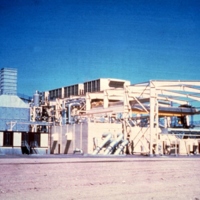
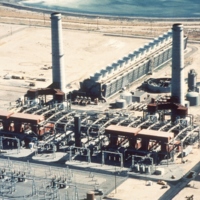
PACE plants were available either with full-enclosure buildings to cover all, but the heat recovery boilers, or for outdoor installation, with the EconoPacs providing the necessary enclosures for the gas turbines and their auxiliaries.
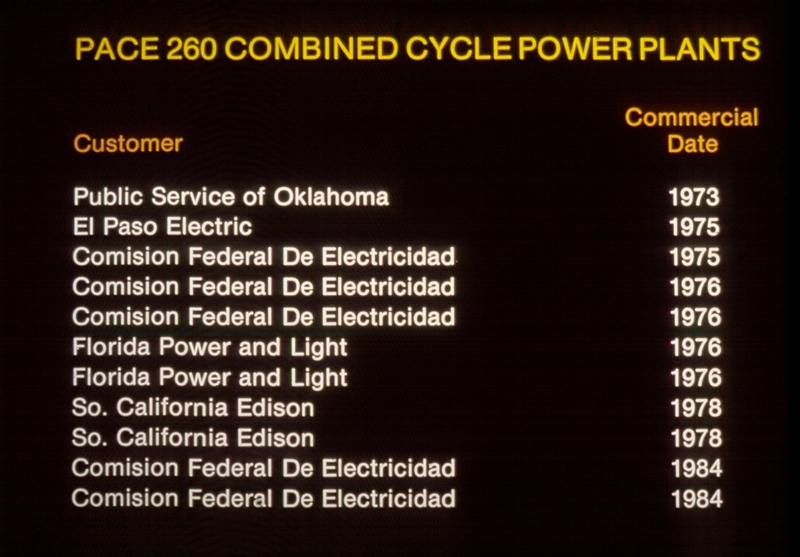
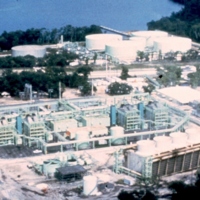
To the left is a list showing the installation of PACE plants as of the mid-1980s. Note that several of the installations included two PACE 260 plants, as mirror image plant designs were available for those cases. These were called PACE 520 plants. It is also noted that nearly half of the plants were built in Mexico: one PACE 260 and two PACE 520s. The final plant on the list was built for Comisión Federal de Electricidad (CFE) in Tula, Mexico, as a phased-construction project, where the four EconoPac units were shipped and installed on an ASAP basis, in simple cycle mode, to meet an energy emergency in the area from1979 to 1981. The heat recovery steam generators (HRSG) and steam turbine portion of each plant was added later and the exhaust stacks were removed.
The three early PACE plants sold to CFE—PACE 260 at Palacio Gomez and PACE 520 at Dos Bocas—involved an order for six W501B gas turbines and represented the largest gas turbine order placed by CFE up to that time. The order was received around 1973 following a very contentious bid competition with the other major U.S. gas turbine manufacturer who used some rather "creative" ways to enhance plant performance. Everyone involved in the negotiation was anxious to get home for Easter, but not so anxious that they would leave before securing the business. They managed to expose the thermodynamic tricks being played by the competition and the customer finally gave Westinghouse the order.
For the early PACE plants, Westinghouse designed and manufactured the heat recovery boilers at the Heat Transfer Division in Lester. Later plants incorporated heat recovery units supplied by subcontractors.
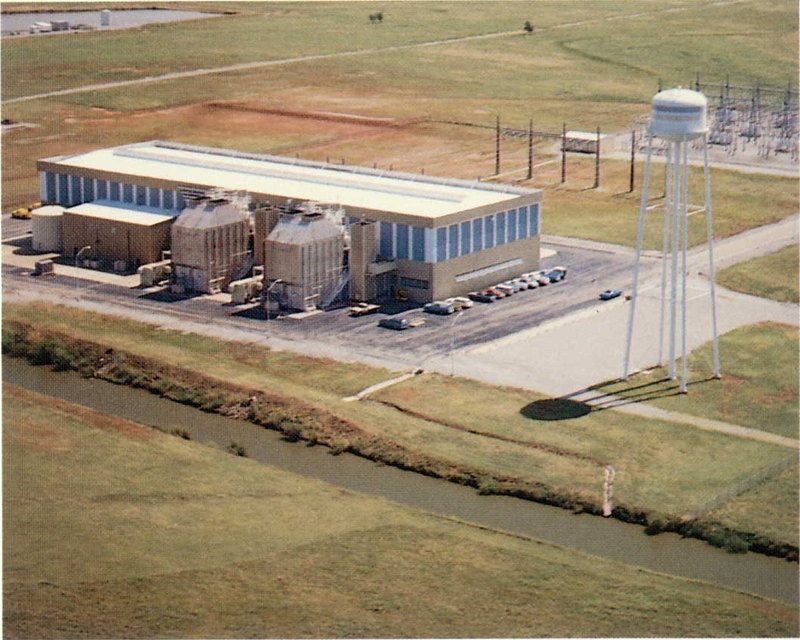
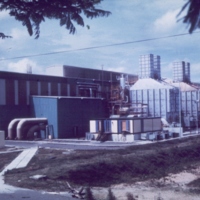
The first PACE 260 was installed at the Public Service Company (PSO) of Oklahoma's Comanche station in Lawton, Oklahoma, entering commercial in 1973. Based on published information, time from commitment to the design program to commercial operation was less than three years. Reference is made to ASME paper 74-GT-109 by Paul A. Berman, which describes the PACE concept in detail and documents the construction and start-up of the Comanche plant. Since its installation, some 40 years ago, the plant went through major boiler modification—as seen in the photograph to the right—several engine performance upgrades and has operated for many years as the most economical plant on PSO’s system. This writer recalls being told that the initial price for natural gas at the site was $0.26 per million Btu. As of this writing, the plant is still in use, albeit not for continuous duty.